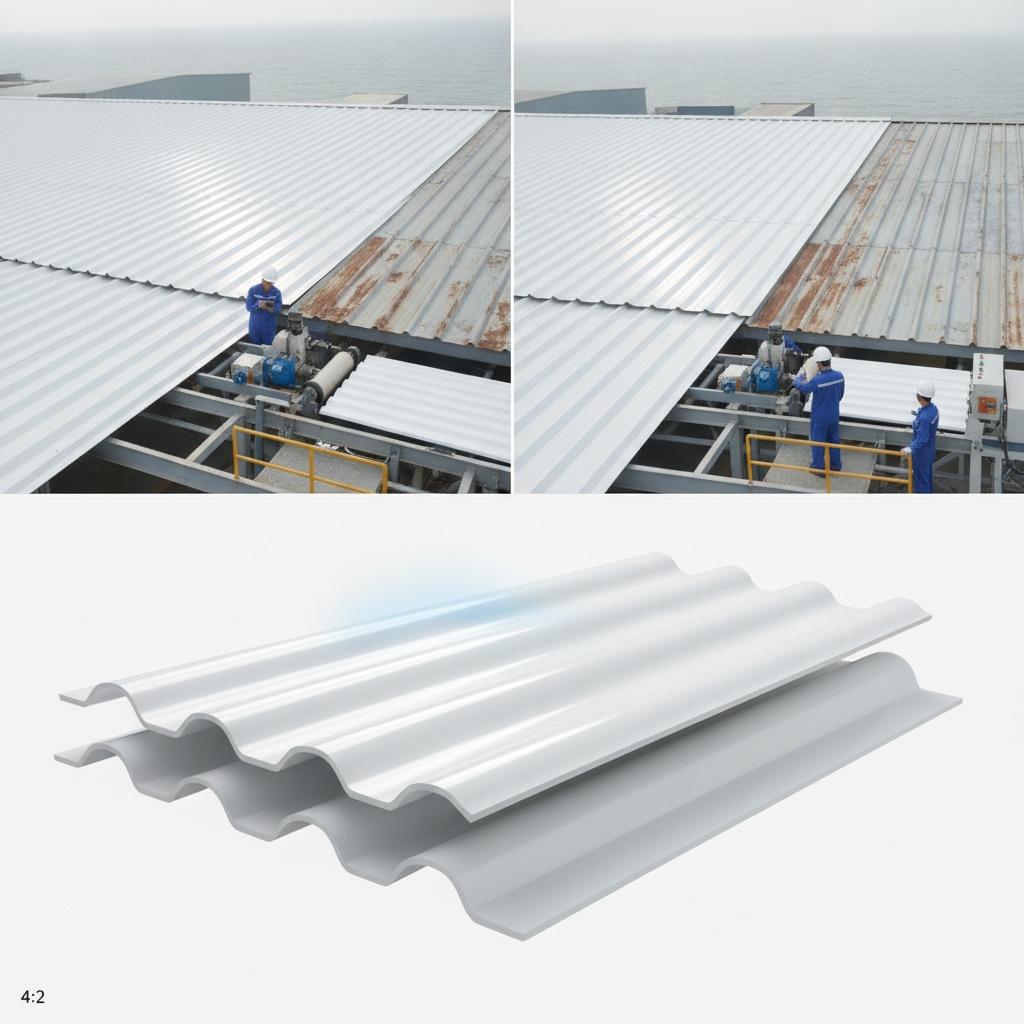
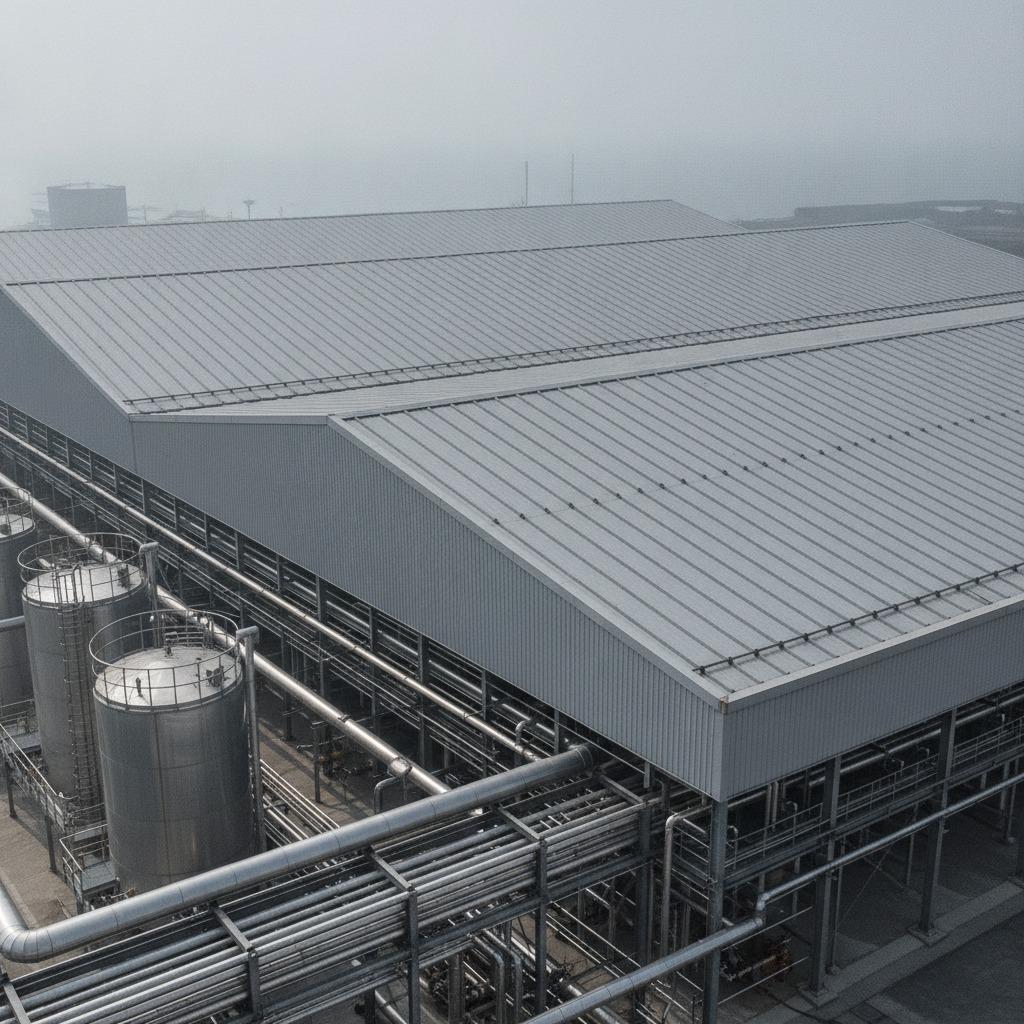
For industrial asset managers and civil procurement engineers, coastal warehouses, chemical processing plants, and livestock facilities present a relentless roofing challenge: premature corrosion. Standard galvanized or pre-painted steel sheets that look pristine during commissioning often show edge creep, rust streaking, and fastener-hole degradation within three to five years under acidic or saline vapor exposure. Finding a reliable UPVC corrugated roof sheet manufacturer is typically the pivot point when maintenance teams decide to move away from cyclical steel recoating and switch to rigid polymer profiles.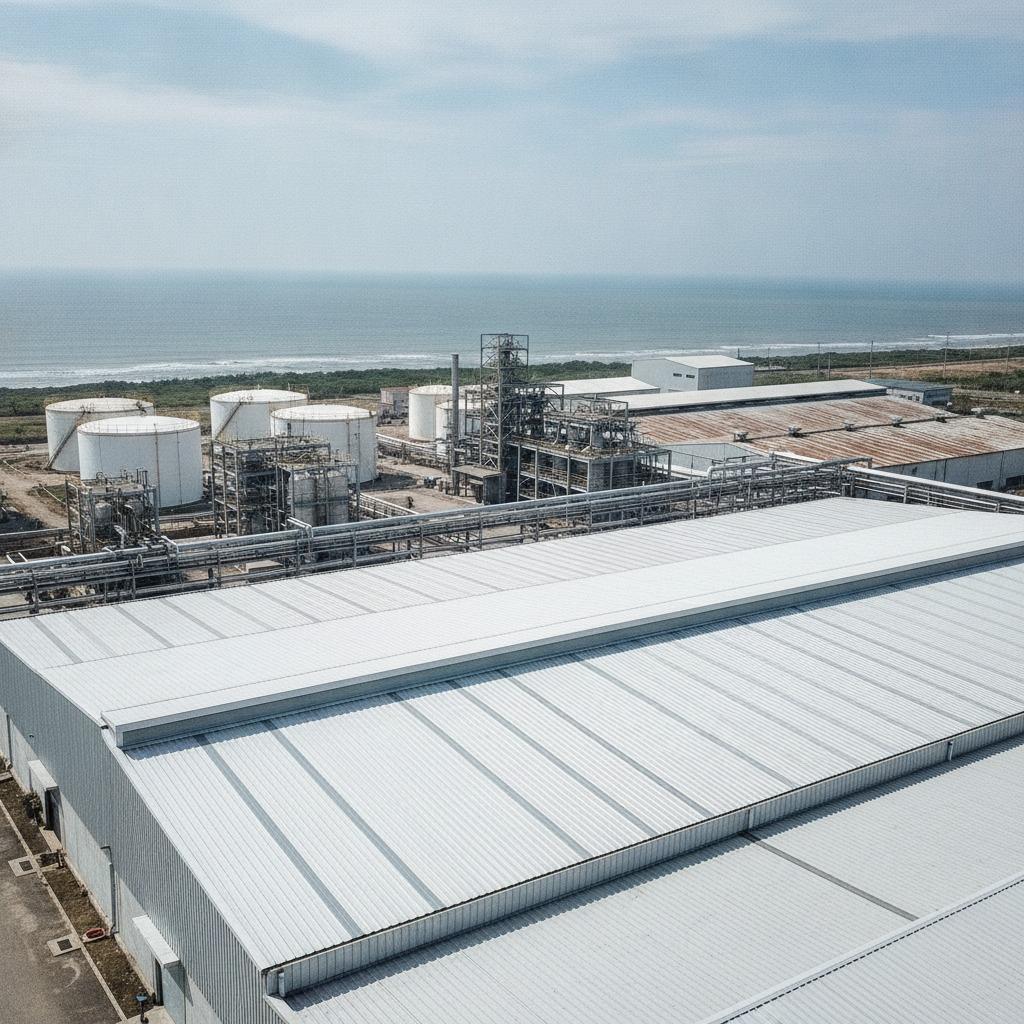
However, the UPVC market spans a vast quality spectrum. What appears identical on a spec sheet—a three-millimeter-thick corrugated white profile—can behave entirely differently under four seasons of thermal cycling and intense solar ultraviolet exposure. Knowing how these sheets are compounded and extruded is the difference between an installation that lasts fifteen years and one that discolors, embrittles, and cracks within twenty-four months.
The Architecture of an Industrial UPVC Sheet
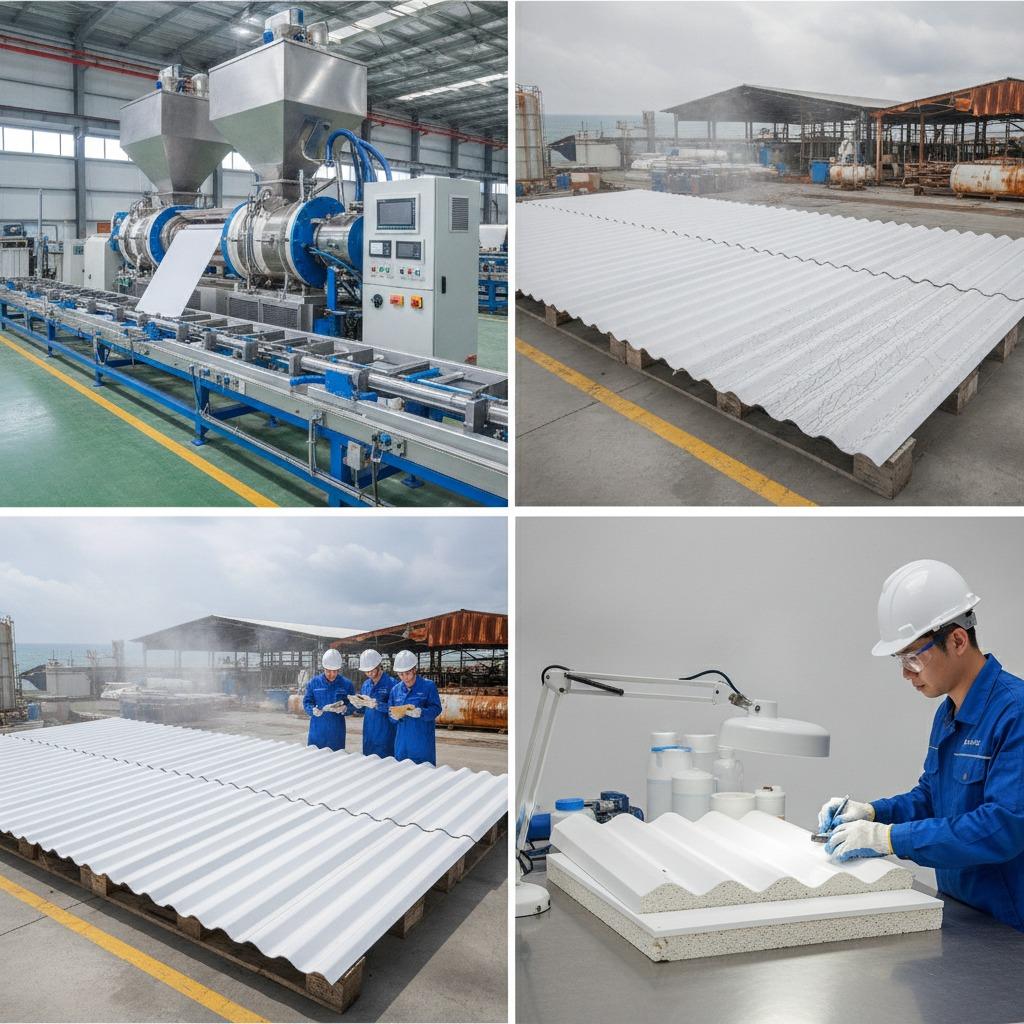
Modern industrial UPVC roofing is rarely a single homogeneous plastic extrusion. High-performing sheets are produced via multi-layer co-extrusion, typically configured as a three-layer or four-layer composite designed to solve distinct mechanical and environmental problems:
1. The Weathering Cap (ASA Layer)
Standard unplasticized PVC has decent chemical resistance, but continuous UV radiation breaks down polymer chains, causing yellowing and surface chalking. A reputable UPVC roofing sheet manufacturer co-extrudes an exterior cap made of Acrylonitrile Styrene Acrylate (ASA). This surface layer acts as a sacrificial UV shield and locks in pigmentation, retaining color stability even in high-solar-irradiance regions.
2. The Core Structural Layer
The middle layer provides flexural rigidity and impact resistance. High-tier extruders formulate this core with a controlled balance of virgin PVC resin, impact modifiers, and minimal calcium carbonate. Some manufacturers introduce a micro-foamed PVC core here, which reduces sheet weight and enhances acoustic and thermal insulation without compromising structural beam strength across standard purlin spans.
3. The Under-Roof Layer
The bottom layer, exposed to the interior of the building, is formulated specifically for chemical and moisture resistance. In electroplating sheds, foundry environments, or animal housing where high ammonia concentrations accumulate under the roof ridge, this layer prevents corrosive gas ingress into the core material.
Evaluating a UPVC Sheet Roofing Manufacturer: Sourcing Realities
When vetting an overseas or domestic UPVC sheet roofing manufacturer, the primary technical risk lies in raw material compounding. Because PVC resin is relatively expensive compared to mineral fillers, low-tier factories lower costs by heavily loading formulations with calcium carbonate (CaCO3).
A sheet with excessive mineral filler feels rigid and heavy when handled, which misleadingly reassures some buyers. In field conditions, however, mineral-overloaded UPVC lacks tensile ductility. As seasonal temperatures fluctuate, the profile cannot accommodate expansion and contraction around fastener penetrations, leading to radial stress cracking around screw heads.
During vendor assessments, procurement teams should look beyond polished sales brochures and verify specific processing indicators:
- Tooling and Wall Thickness Consistency: Inspect profile samples with a digital caliper across the crown, web, and valley of the corrugation. Cheap extrusion dies yield inconsistent wall thickness, often thinning dangerously at the peak of the corrugation where weather exposure is most severe.
- Layer Fusion Integrity: Cut a sample piece at a forty-five-degree angle and check the edge under magnification. The ASA cap and base PVC layers must be chemically fused into a cohesive cross-section. Any visible delamination indicates inadequate temperature control during the co-extrusion feedblock stage.
- Linear Thermal Expansion Allowances: UPVC has a significantly higher thermal expansion coefficient than structural steel. An experienced manufacturer will not only supply the material but also provide documented installation details specifying slotted screw holes, oversized washers, and prescribed torque limits to avoid crushing the corrugation crest.
Common Field Failure Modes and How to Prevent Them
Even when procuring from a capable UPVC corrugated roof sheet manufacturer, installation oversights can compromise long-term performance. The most frequent issue on industrial jobsites involves fastener selection and overtightening. If crews drive self-drilling screws with excessive torque, they create a permanent depression in the crown, trapping water and initiating stress micro-cracks.
A second common oversight is neglecting profile purlin spans. While corrugated geometry adds rigidity, UPVC does not possess the same structural modulus as 0.6mm structural steel. Purlin spacing must adhere strictly to the manufacturer's load-deflection tables, typically requiring closer support centers—often between 600mm and 900mm depending on regional wind uplift and snow load criteria.
Frequently Asked Questions
Can UPVC corrugated roofing support direct foot traffic?
No. As with most non-metallic industrial roof coverings, personnel should never step directly onto the corrugations. Walk boards or crawling boards spanning across purlins must be utilized during maintenance to distribute point loads safely.
How does UPVC perform in fire hazard assessments?
Rigid unplasticized PVC is inherently flame-retardant due to its high chlorine content. It typically achieves a Class B1 or Class 1 flame spread rating under major standards, meaning it extinguishes naturally once the direct flame source is removed, without producing burning droplets.
What is the typical lead time when ordering custom lengths?
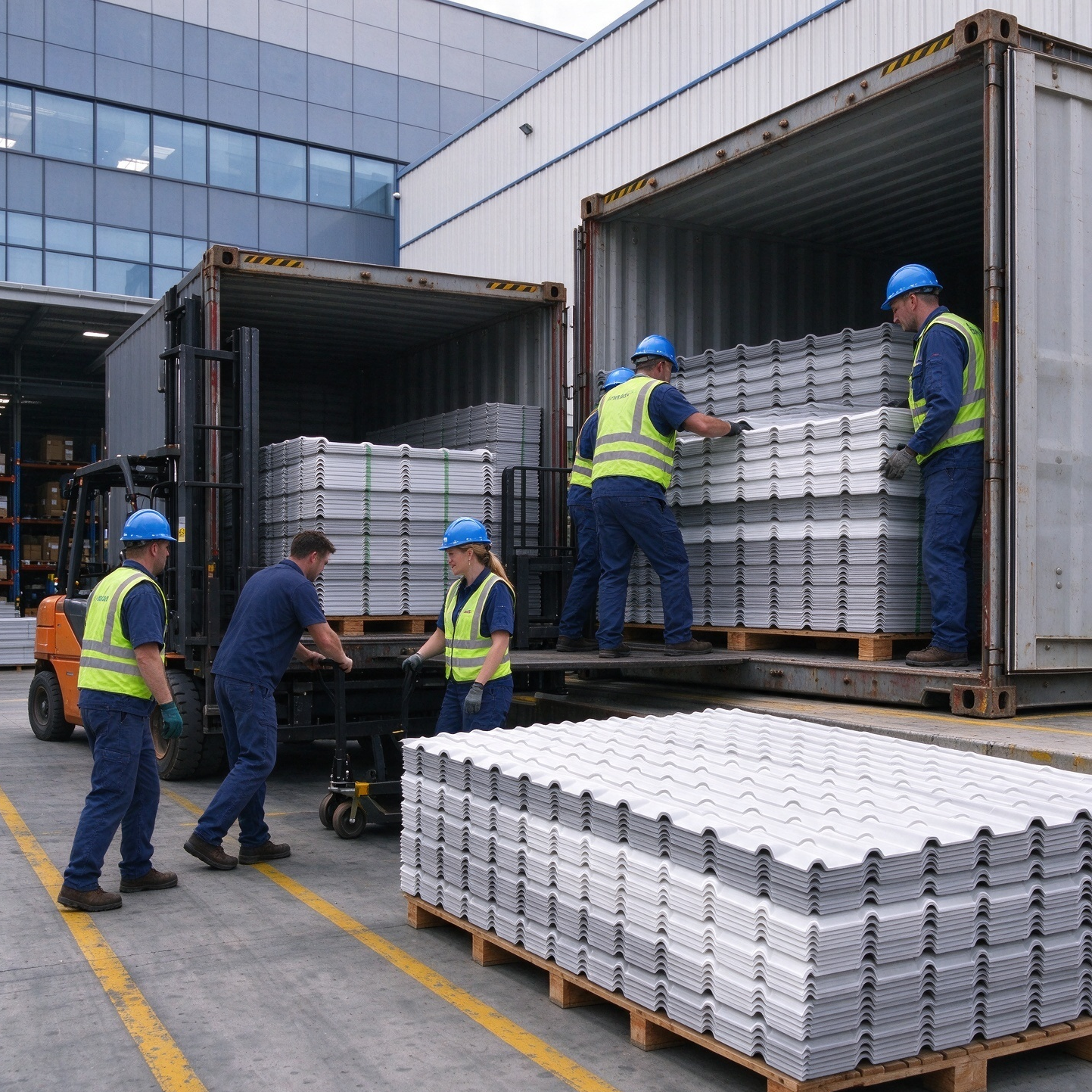
Because corrugated sheets are continuously extruded and cut inline via flying shears, custom sheet lengths—up to transportable container or flatbed limits—are standard practice. Typical factory production runs require two to four weeks depending on color matching and tooling changeovers.
Next Steps for Sourcing Teams
Before committing to container-scale purchase orders, request production-run retention samples rather than pre-prepared showroom pieces. Conduct an in-house flex test, inspect the cap-layer thickness under magnification, and confirm that the supplier provides project-specific fastening recommendations. Sourcing reliable roof profiles comes down to validating resin integrity long before the material arrives at the jobsite.