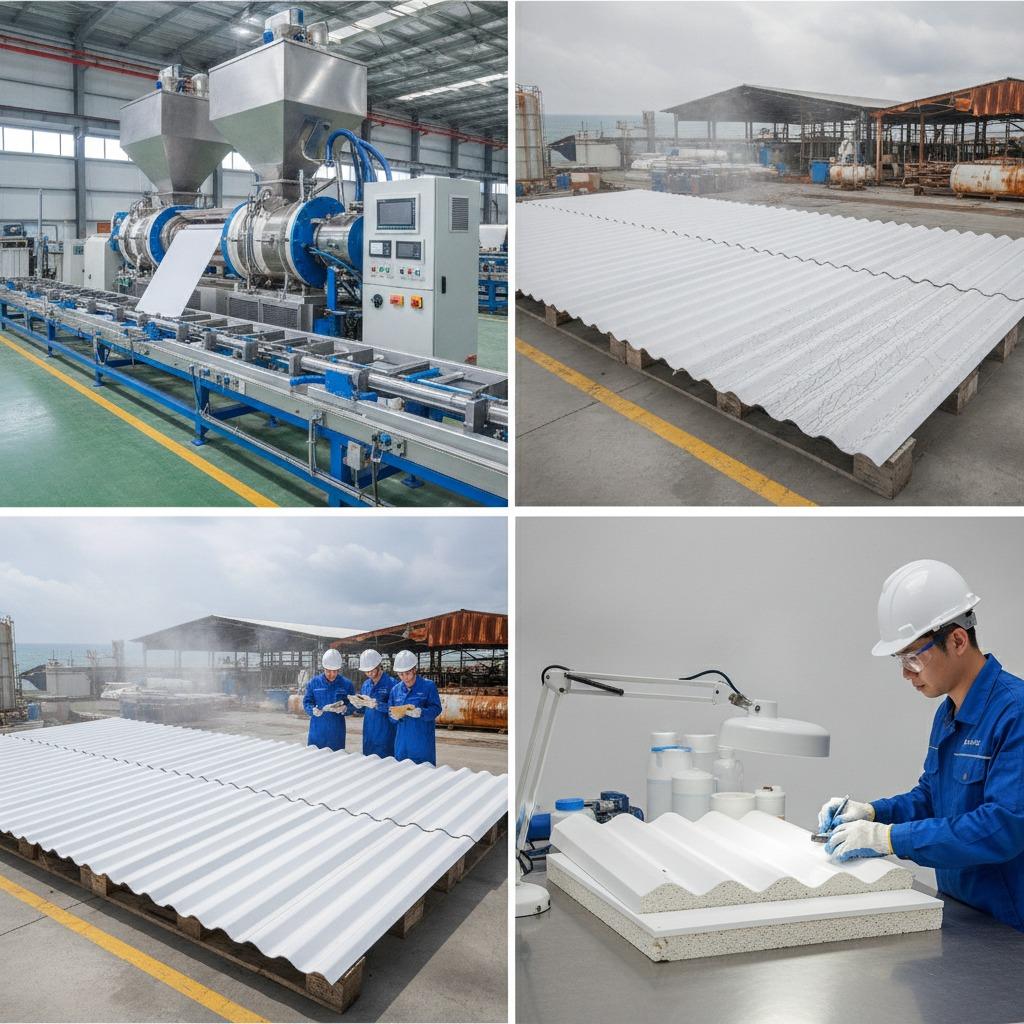
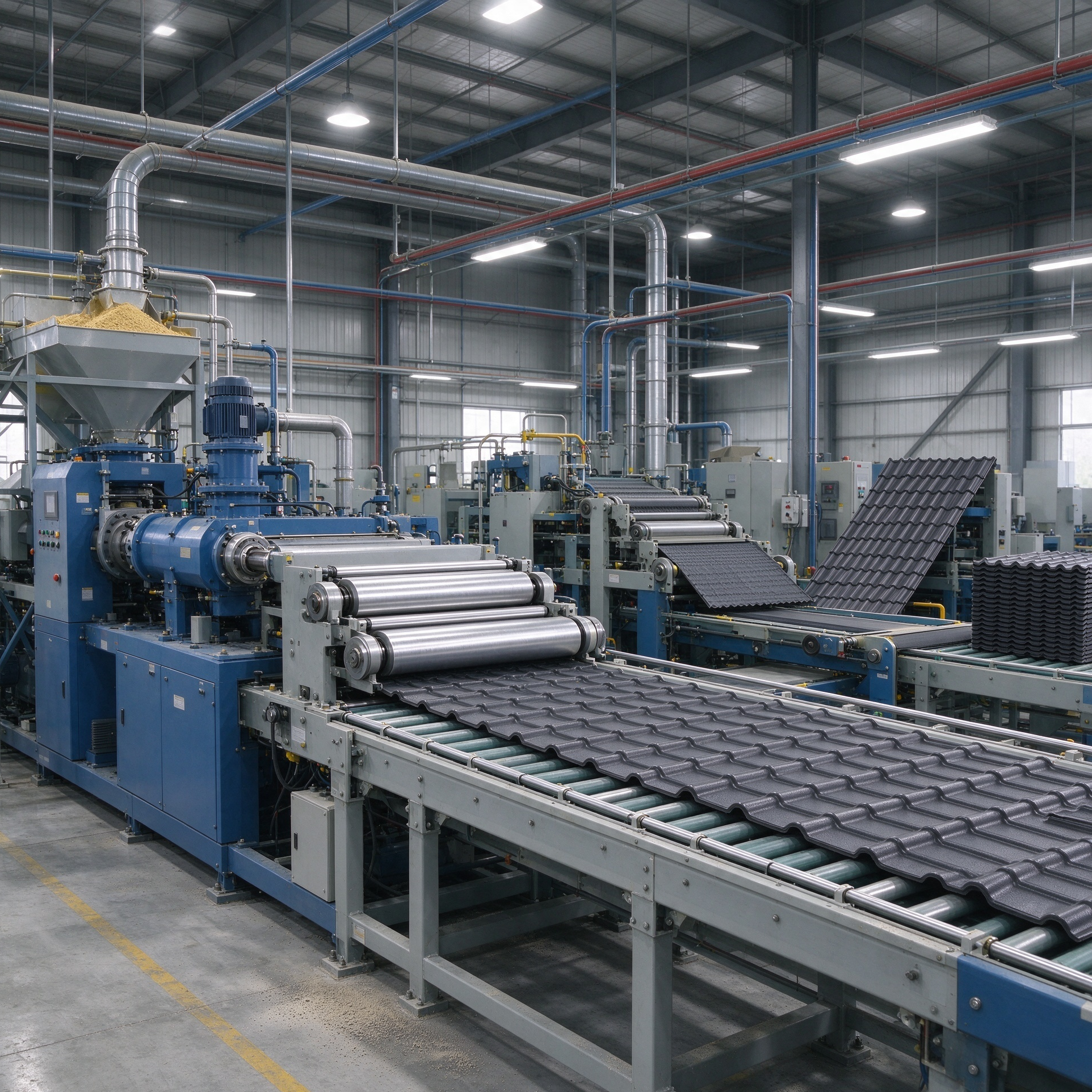
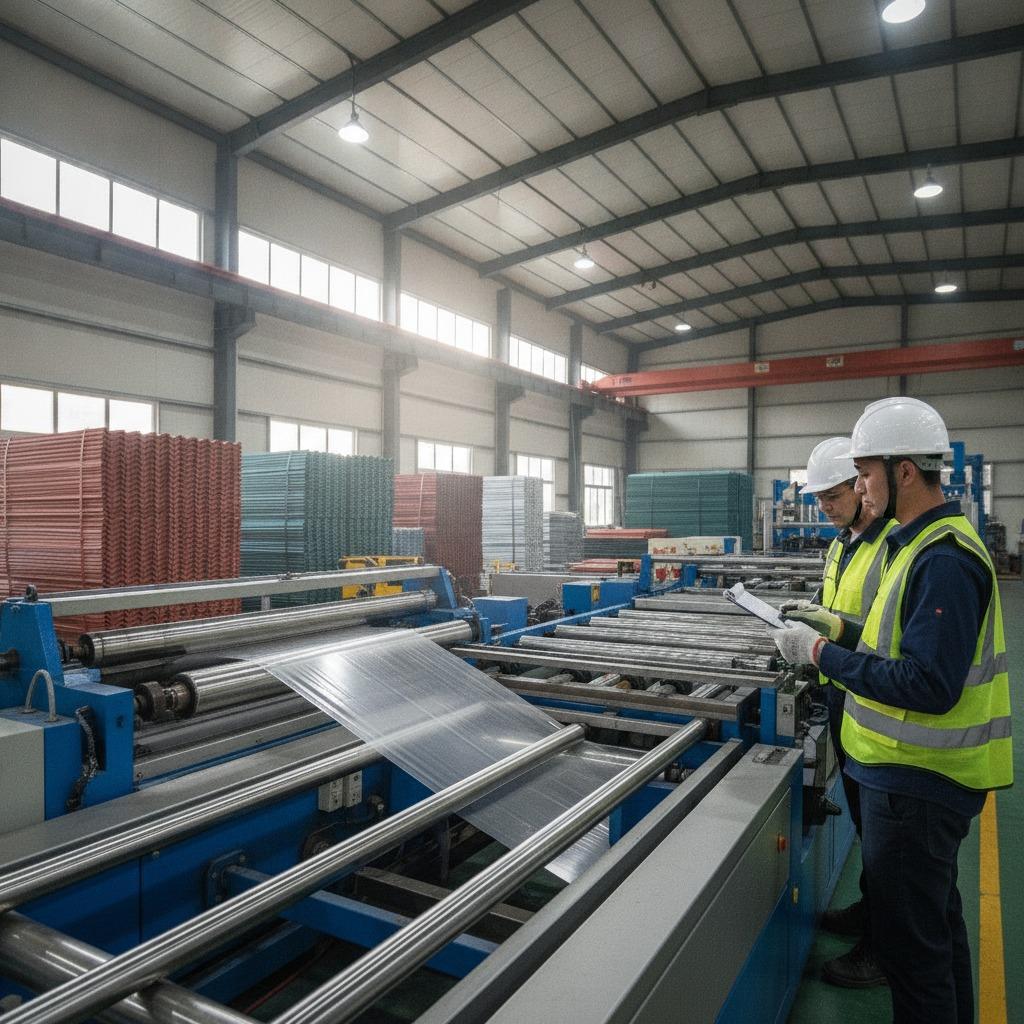
Step onto the floor of a modern plastics extrusion facility, and the first thing you notice is the steady thermal hum of multi-zone barrel heaters and the faint, sweet scent of warm polymers under pressure. High-torque twin-screw extruders force molten vinyl compound through precision-machined slot dies, feeding continuous amber ribbons into calibrated corrugated formers. For industrial buyers, structural engineers, and agricultural developers, finding the right PVC corrugated roofing sheet manufacturer is rarely just about buying plastic panels by the linear meter. It is a calculated hedge against the aggressive corrosion that reduces conventional metal decking to rusted flakes within half a decade.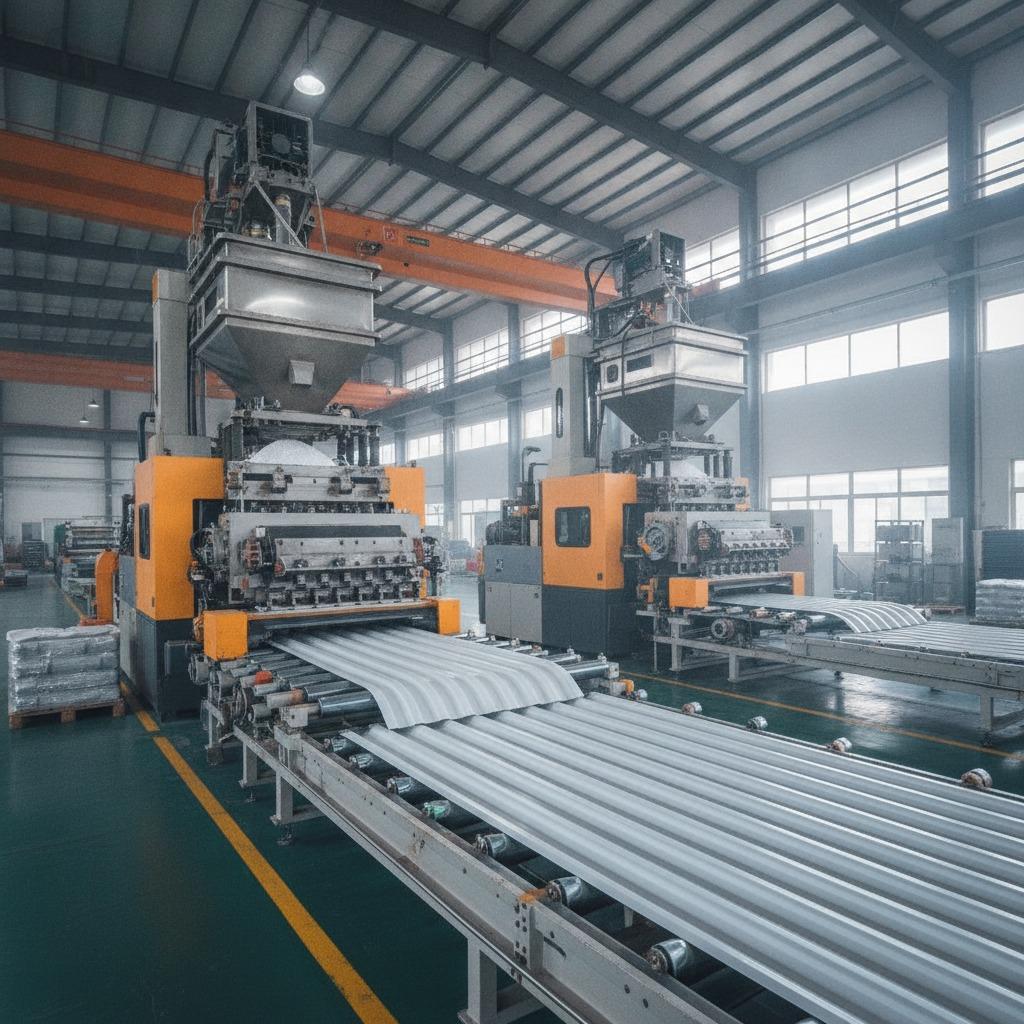
In chemical processing sheds, coastal marine storage, and intensive livestock barns saturated with ammonia vapor, pre-painted steel sheets deteriorate rapidly. A seasoned PVC roofing sheet manufacturer engineers a solution that shrugs off acidic moisture, salt spray, and sulfurous gases. But the market spans a vast spectrum of quality, ranging from cheap, chalky sheets loaded with recycled chalk filler to sophisticated multi-layer co-extruded composites capable of surviving decades of punishing tropical sunlight.
The Co-Extrusion Line: Understanding ASA Weathering Layers
Standard polyvinyl chloride is intrinsically stiff and flame-resistant, but unshielded PVC struggles under prolonged ultraviolet bombardment. Solar UV radiation gradually breaks the chlorine bonds along the polymer backbone, leading to photo-oxidation, surface yellowing, micro-cracks, and eventual brittleness. This physical reality is why partnering with an experienced ASA PVC roofing sheet manufacturer has become the industrial baseline for exterior envelope design.
High-performance sheets typically feature a multi-layer co-extrusion architecture:
- The Weathering Top Cap: A thin, co-extruded veneer of Acrylonitrile Styrene Acrylate (ASA). ASA replaces the butadiene rubber found in ABS with an acrylic elastomer, conferring exceptional resistance to UV degradation, thermal fading, and gloss loss. When you rub your fingers over a premium sheet, this surface feels dense, smooth, and satin-finished rather than oily or plasticky.
- The Structural Core Layer: Rigid PVC compounded with specialized impact modifiers, processing aids, and thermal stabilizers (predominantly calcium-zinc systems replacing legacy lead stabilizers). This provides structural stiffness, impact absorption against hail, and fire retardancy.
- The Bottom Wear Layer: A tough, moisture-impervious backing layer, often tinted white or light gray to boost interior light reflectance inside sprawling warehouse bays without requiring artificial daylighting during midday hours.
Selecting a specialized ASA PVC roof sheet manufacturer ensures that the bond between these layers is molecularly welded in the feedblock before exiting the flat extrusion lip, preventing inter-layer delamination when the sheet expands and contracts across 40°C diurnal swings.
Raw Material Formulations: The Hidden Filler Trap
When evaluating quotes, procurement teams are often baffled by wide price variances between suppliers for identical panel thicknesses. The explanation almost always sits in the formulation hopper, specifically the ratio of resin to calcium carbonate (CaCO3).
Calcium carbonate serves a legitimate purpose in compounding; it enhances dimensional stability, improves heat transfer during extrusion cooling, and controls melt viscosity. However, unscrupulous plants treat cheap ground limestone as a cost-cutting weight loader. When the filler loading exceeds reasonable thresholds—often creeping past 30% by weight—the physical properties fall off a cliff. The sheet becomes dense, heavy, and notoriously brittle.
A reputable pvc roof sheet manufacturer maintains tight compounding tolerances, typically running filler loads below 15% to 20% for exterior structural grades. You can often detect over-filled sheets on-site: when flexed across the corrugation flank at ambient temperatures, an over-loaded sheet snaps with a dry, chalky fracture edge instead of yielding smoothly under tension.
Profile Engineering: Balancing Span Strength with Drainage
Corrugated and trapezoidal sheet geometries are not merely aesthetic choices; they dictate how the roof behaves under physical wind uplift and monsoon runoff. A competent ASA PVC roofing manufacturer balances profile depth against panel flexural rigidity.
Round wave (sinusoidal) corrugations distribute flexural stresses evenly and are easier to clean under natural rain wash, making them popular for agricultural shelters and perimeter walls. In contrast, deep trapezoidal rib profiles—often featuring ribs standing 25 mm to 38 mm high—deliver significantly higher moments of inertia. These taller profiles allow longer spans between steel purlins without exhibiting unsightly mid-span sag under dead loads or solar softening.
Keep in mind that PVC has a relatively high coefficient of thermal expansion—roughly 0.07 mm/(m·°C), which is three to four times that of carbon steel. A well-designed corrugated profile accommodates this lateral breathing across the wave crowns, provided your installation teams pre-drill oversized fastener holes rather than driving self-drilling screws directly through the crests.
Key Inspection Checks During Factory Audits
Before awarding a high-volume supply contract, walking the production floor or commissioning a third-party factory inspection reveals whether the plant is truly an engineered manufacturer or simply a low-cost panel stamper.
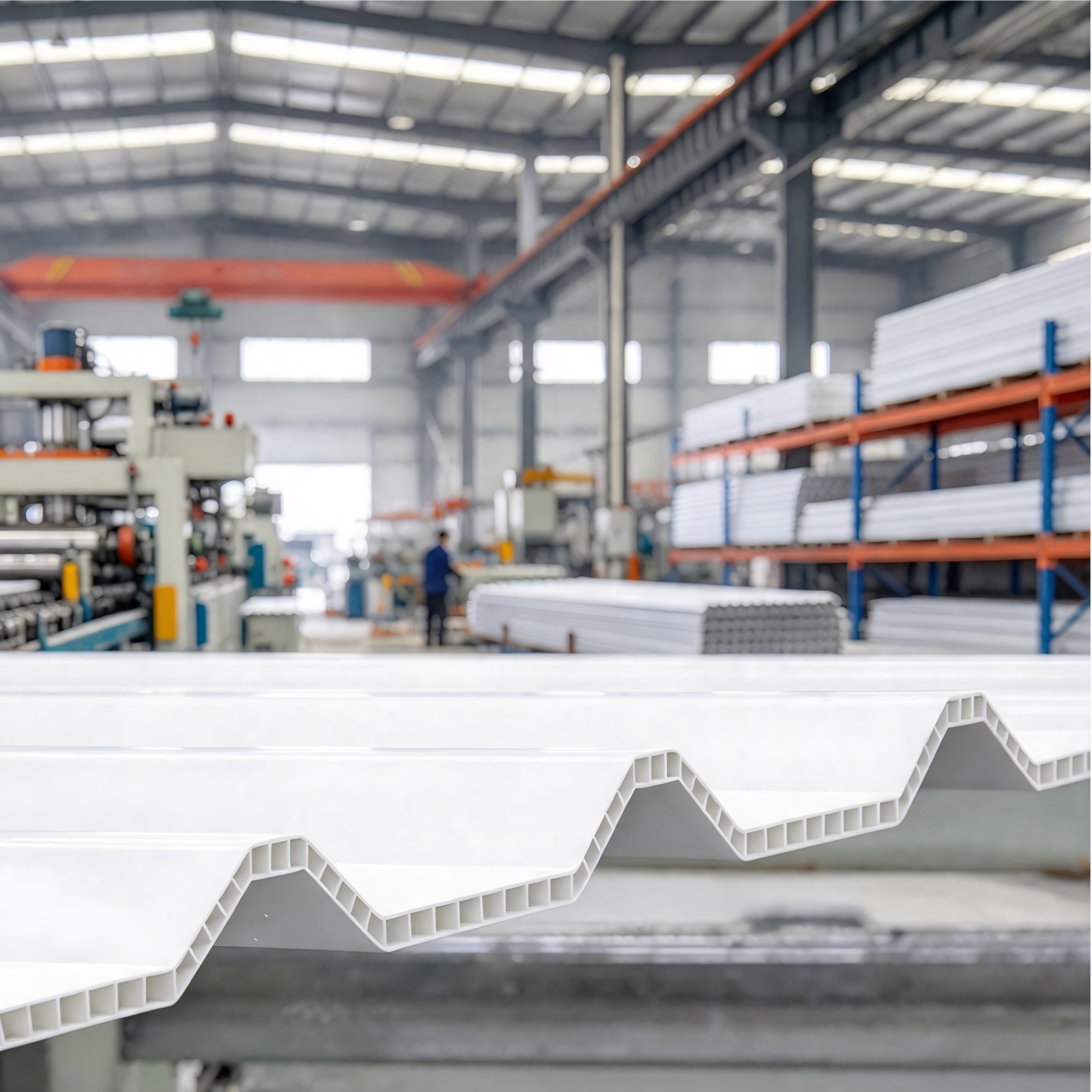
Inspect the downstream cooling line: are the corrugation molds chilled with precision water circuits, or are sheets unevenly cooled via open-air water baths that induce internal frozen stresses? Look at the cross-cut saw cut-faces. A high-quality extruded sheet exhibits a uniform, homogeneous cross-section with razor-sharp wall thickness consistency across every ridge and valley. If the crown of the wave is visibly thinner than the flat valleys, the extrusion die's internal choke bar is poorly tuned, leaving the crests vulnerable to early puncture or impact failure.
Ask the lab technicians to demonstrate their falling-dart impact test and thermal shrinkage ovens. A reliable supplier should willingly submerge panel coupons in 150°C oil or circulating hot air to measure longitudinal shrinkage; if the coupon curls excessively or shrinks beyond standard tolerances (typically under 2% to 3%), the orientation stresses locked in during takeoff pulling were never properly relieved.
Practical Buyer Advice and Specifier Guidance
When drafting specifications, avoid writing generic requests for "corrugated plastic sheeting." Specify the exact nominal thickness (typically 2.0 mm, 2.5 mm, or 3.0 mm for heavy-duty industrial envelopes), specify a virgin ASA cap layer with a measurable thickness (often 50 microns or greater for 10- to 20-year colorfastness), and require UV stabilizers rated for your site's specific solar irradiance zone.
Furthermore, factor in matching accessories. The finest co-extruded sheet will fail if paired with raw carbon steel screws or cheap EPDM sealing washers that embrittle in six months. Always source color-matched self-tapping screws fitted with broad-flange weather caps made from identical UV-stabilized materials.
Frequently Asked Questions
How do PVC corrugated sheets behave in a commercial fire?
Rigid unplasticized PVC is inherently self-extinguishing due to its high chlorine content. It generally carries a Class B1 or equivalent flame spread rating under standard testing, meaning it stops burning once the ignition source is removed. Unlike fiberglass panels (FRP) that can burn vigorously or polycarbonates that drip molten flaming droplets, quality rigid PVC chars and carbonizes.
Can PVC sheets replace metal on low-pitch roofs?
They can, but slope limits matter. While metal standing-seam decks can sometimes drop to 2 or 3 degrees, corrugated PVC typically demands a minimum slope of 1:10 (approximately 6 degrees) or higher. Lower pitches risk water ponding in the valleys during torrential downpours, which accelerates dirt accumulation and increases the risk of water tracking backwards through lap joints.
Is walking directly on PVC corrugated panels safe during maintenance?
No. Regardless of thickness or structural rib design, point loads from human boots concentrate stresses dangerously across the wave crowns. Always mandate crawling boards or ladder tracks that span across at least two purlin supports during cleaning, gutter clearing, or solar equipment servicing.
If your next project involves harsh, chemically corrosive interior atmospheres or coastal salt exposures where galvanized sheeting routinely fails, reach out to an experienced engineering sales team to request cross-sectional cut samples, color-fastness weathering data, and profile loading tables tailored to your purlin grid.