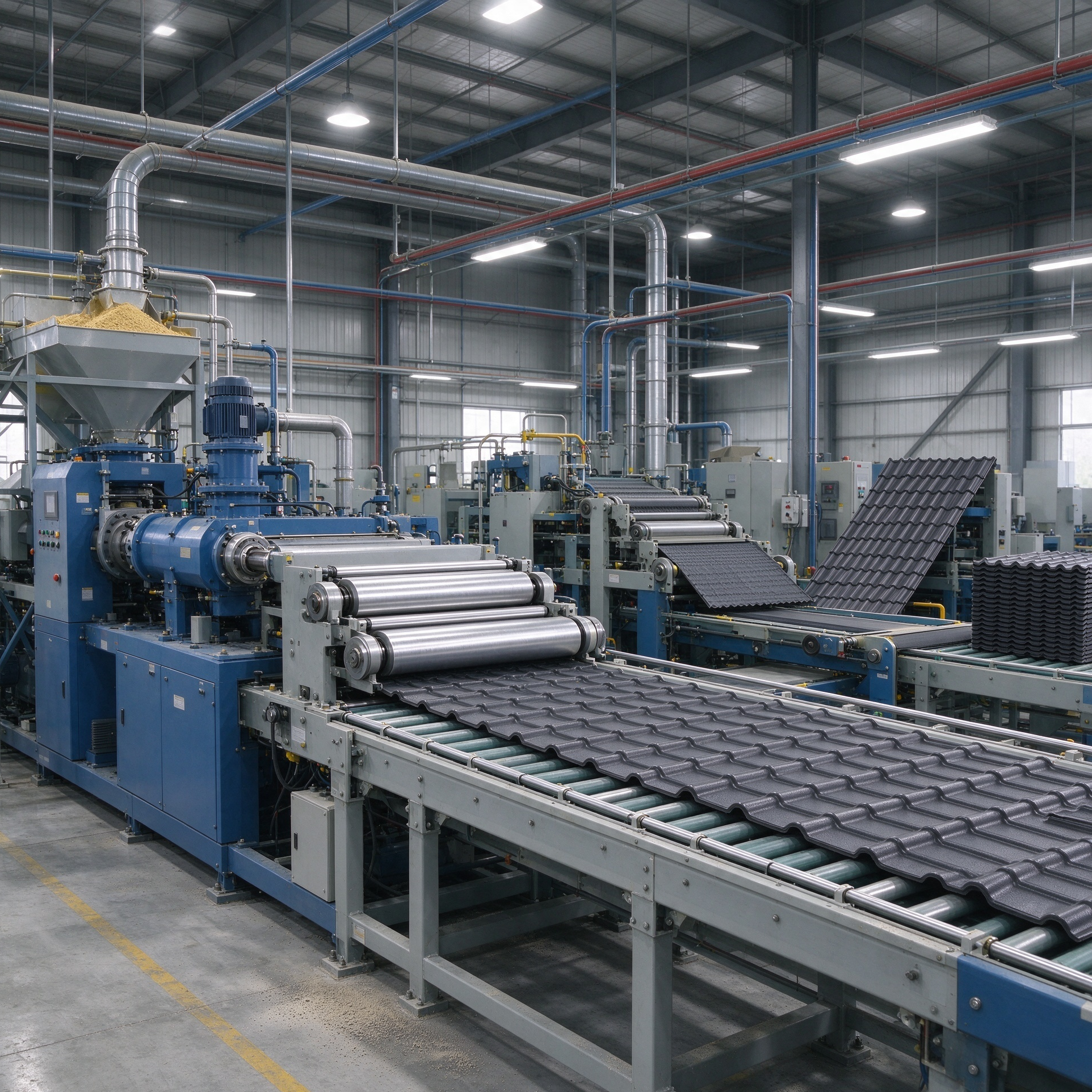
If you have ever had to replace an industrial roof prematurely because acid fumes, maritime salt spray, or relentless UV radiation chewed through coated steel sheets in under four years, you already know the cost of selecting the wrong material. Sourcing from a reliable ASA UPVC roof tiles manufacturer is increasingly the obvious strategic route for chemical facilities, smelting operations, coastal logistics parks, and modern agricultural housing. Yet, simply issuing an RFP for co-extruded plastic roofing panels will not protect you from catastrophic roof failure if you do not understand where extrusion plants take chemical shortcuts.
The market is flooded with panels that look identical on a specimen board. However, roofing is fundamentally chemical engineering under ambient mechanical stress. Persuading your procurement board to look beyond the lowest unit price per square meter requires unpacking the physics of the extrusion line and the chemistry of composite polymers.
The Real Chemistry: Why the ASA Cap Layer Must Be Non-Negotiable
Industrial buyers often ask why standard rigid PVC isn't enough. Unplasticized polyvinyl chloride provides outstanding chemical resistance and mechanical rigidity, but it has an Achilles' heel: long-term photochemical degradation. Under continuous solar radiation, unshielded PVC loses plasticizers (if present) and suffers polymer chain scission, turning brittle and faded within several seasons.
This is why partnering with an experienced ASA UPVC roof tiles manufacturer matters. The Acrylonitrile Styrene Acrylate (ASA) exterior cap layer, applied via continuous multi-layer co-extrusion, functions as a perpetual shield. Acrylonitrile delivers chemical resistance and surface hardness; styrene provides mechanical rigidity and processability; acrylate provides exceptional weatherability and UV stability without the photo-oxidation vulnerabilities typical of diene-based polymers.
Here is where caution is needed: some suppliers dilute the ASA cap layer with cheaper polymethyl methacrylate (PMMA) or reduce the cap thickness down to an ineffective 0.05 mm to cut cycle costs. A production-grade industrial tile demands a consistent ASA thickness of at least 0.15 mm to 0.20 mm. Anything less is merely decorative paint pretending to be an engineering polymer.
Evaluating Core Formulations: Solid PVC vs. Co-Extruded Foamed Layers
When auditing a prospective UPVC roof tiles manufacturer, examine how their core layer is compounded. Generally, industrial corrugated and trapezoidal tiles fall into two architectural categories:
1. Multi-Layer Solid Co-Extrusion
Typically a three- or four-layer design. The outer layer is pure virgin ASA. The intermediate layer is impact-modified virgin UPVC designed for tensile and flexural strength. The bottom layer is a high-grade chemical-resistant UPVC, often formulated in an off-white or light gray to maximize internal light reflectance inside the building.
2. Micro-Foamed Structural Co-Extrusion
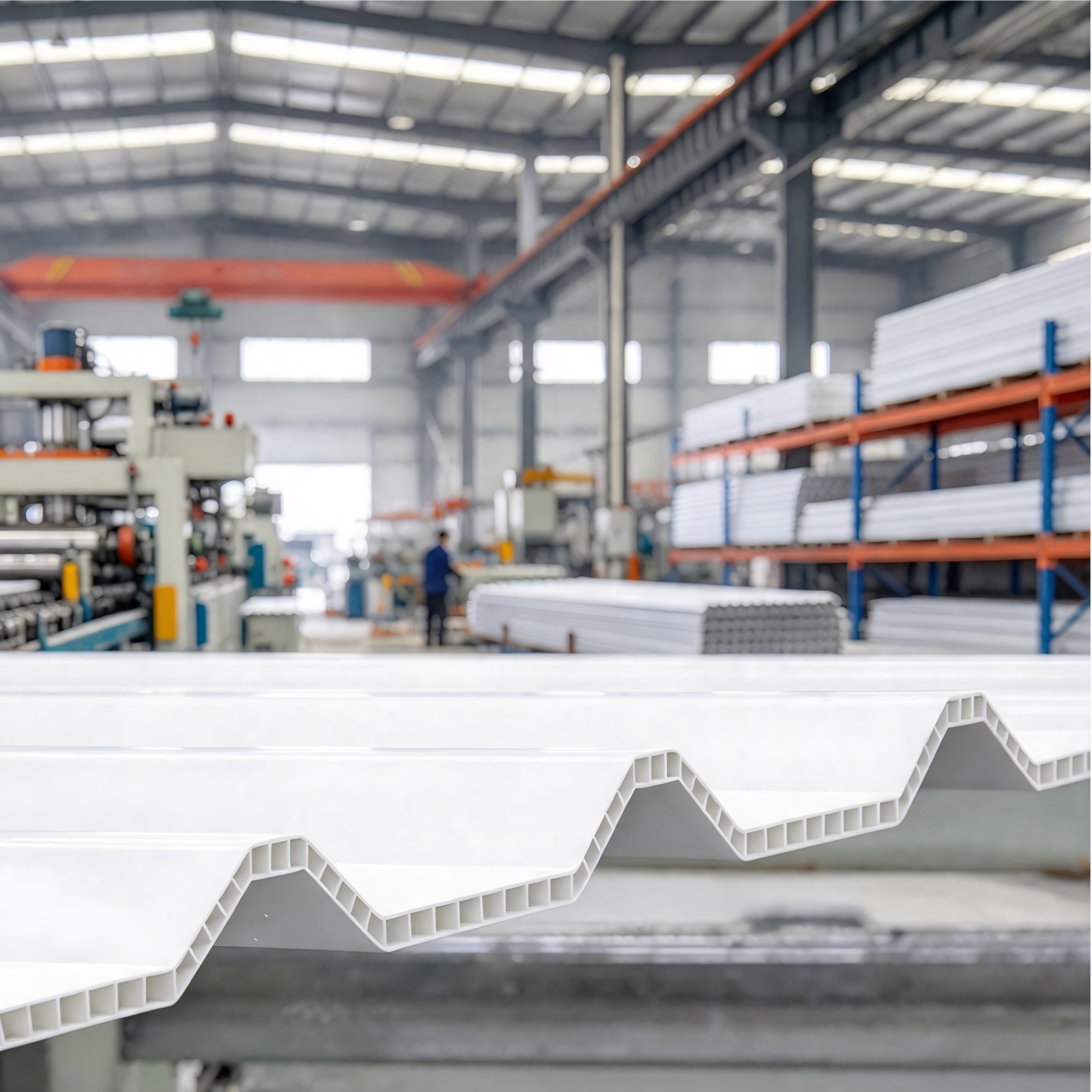
Here, the central UPVC core utilizes a controlled chemical foaming agent. This reduces total sheet weight while increasing sound attenuation and thermal insulation—valuable in livestock sheds or regions prone to monsoon noise. However, micro-foaming requires tight extruder screw temperature control. If the foaming structure has irregular, macro-sized voids, flexural load limits drop drastically, making the panels vulnerable to heavy snow loads or foot traffic during maintenance.
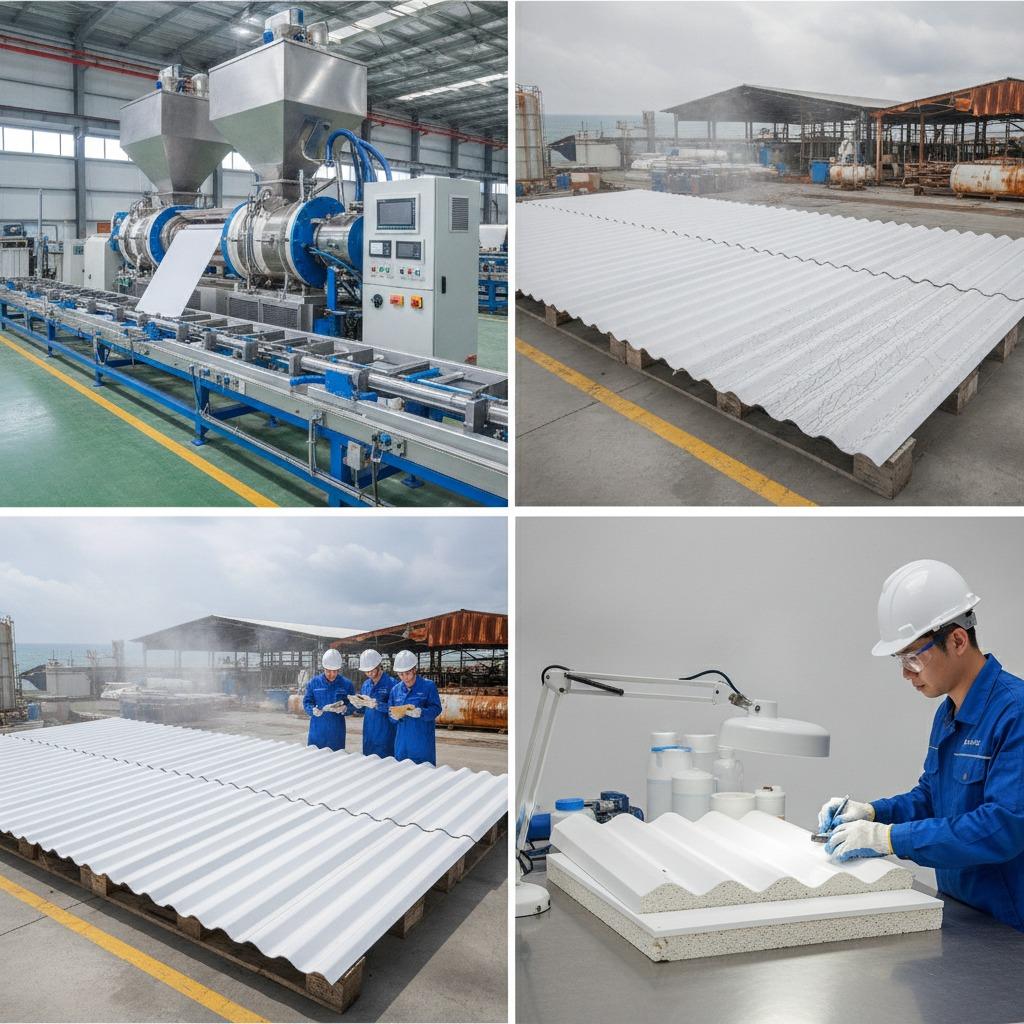
Any qualified UPVC roofing tiles manufacturer should be able to provide micro-structural cross-section imaging upon request, showing precise layer demarcation without air pockets or boundary delamination.
The Hidden Trap: Calcium Carbonate Overloading
To undercut bids, low-tier compounders play a dangerous game with fillers. Calcium carbonate (CaCO3) is a standard functional additive used to stabilize dimensions and control resin costs. In balanced formulations, it enhances rigidity without compromising tensile strength.
Once a plant pushes filler content past 25% or 30% by weight, the tile becomes dense, chalky, and structurally brittle. It might look acceptable out of the shipping container, but thermal shock—such as rapid surface cooling from an afternoon downpour after hours of 40°C direct sun—creates micro-fractures around fastener penetrations. If you are negotiating with a UPVC roof manufacturer, require them to stipulate the ash content percentage in the technical data sheet. A burn-off test will quickly reveal whether you are buying engineered polymer or expensive stone dust pressed into a die.
Critical Questions to Put to a UPVC Roofing Manufacturer Before Issuing a PO
Before committing to container-load orders, skip the sales pitch and run these technical checks directly with the plant’s engineering team:
- Resin Provenance: What is the brand and grade of the raw ASA resin? Tier-one suppliers generally utilize material from recognized global petrochemical producers (such as LG Chem, SABIC, or INEOS Styrolution) rather than unbranded domestic compounds.
- Recycled Scrap Limits: Does the middle layer contain post-consumer scrap? While clean, in-house edge trim regrind is acceptable within strict limits (typically under 10%), post-consumer scrap introduces thermal instability and unpredictable embrittlement.
- Thermal Expansion Engineering: Polymer panels expand and contract significantly more than corrugated galvanized steel. Does the supplier provide matched mounting hardware featuring oversized pre-punched washers and EPDM-cushioned saddles, or do they expect you to source generic drywall fasteners?
- Purlin Span Recommendations: Be wary of factories that claim excessive unsupported purlin spans (e.g., beyond 800 mm to 900 mm for 2.5 mm thickness). Over-promising on purlin distances to make a project seem cheaper to frame almost always ends in severe roof sagging under peak summer heat.
Field Performance Depends on Fastener Discipline
Even the best engineered panels will fail if installed like sheet metal. Because UPVC has a relatively high coefficient of thermal expansion, screw holes must always be pre-drilled 2 mm to 3 mm larger than the fastener shank to accommodate seasonal movement. Overtightening screws will instantly crush the trapezoidal ribs and induce local stress cracking. Make sure the technical team at your chosen manufacturing partner supplies clear, bilingual installation guidelines that specify tightening torques and saddle clip positions. Sourcing managers frequently overlook installation hardware, only to discover leaks around fastener shafts six months post-commissioning.
Frequently Asked Questions
Can ASA UPVC roof tiles be walked on during maintenance?
Workers should never step directly on the center of the corrugated span. While high-grade UPVC panels tolerate significant flexural strain, OSHA-compliant crawler boards or purlin-supported walk boards must always be used during maintenance to spread point loads and avoid accidental puncture or personal injury.
How do these tiles react to direct chemical exposure compared to coated steel?
Unlike galvanized or even PVDF-coated steel panels, which rely on a microscopically thin paint barrier that can be compromised by scratches, UPVC is chemically inert through its entire thickness. It does not oxidize, react with sulfur dioxide emissions, or degrade when exposed to salt-laden sea air, making it superior for aggressive industrial atmospheres.
What sheet thickness is optimal for industrial warehousing?
For permanent commercial and industrial installations, a total thickness between 2.5 mm and 3.0 mm is industry standard. Panels under 2.0 mm are generally reserved for temporary agricultural canopies, light residential carports, or small perimeter enclosures.
Taking the Next Step in Sourcing
Switching from traditional metal roofing to high-performance polymer panels is one of the most reliable ways to eliminate recurring facility maintenance costs in corrosive environments. However, the performance gap between a premier plant and an unmonitored compounder is immense. Request accredited laboratory test certificates covering artificial accelerated weathering (xenon arc testing), ash content verification, and tensile break limits. Run your own thermal drop tests on incoming product samples before approving high-volume production runs.