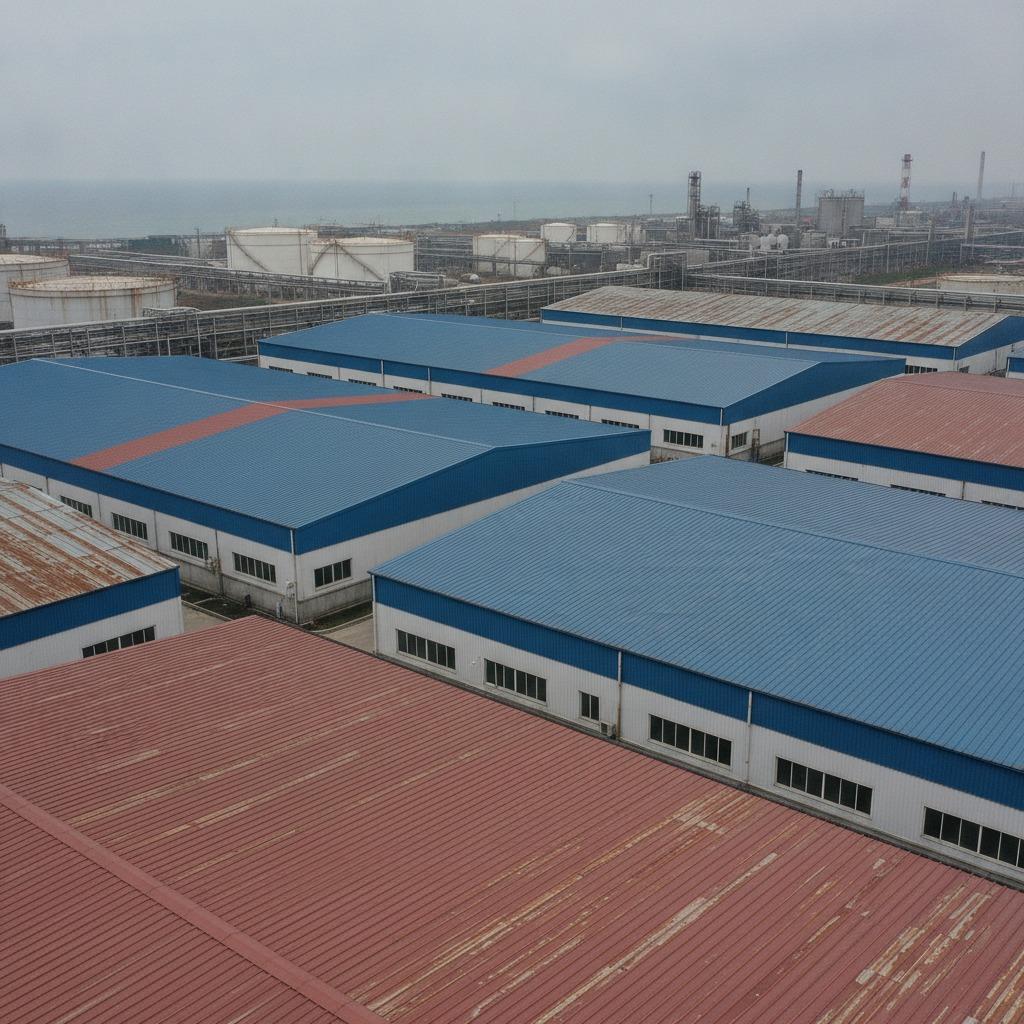
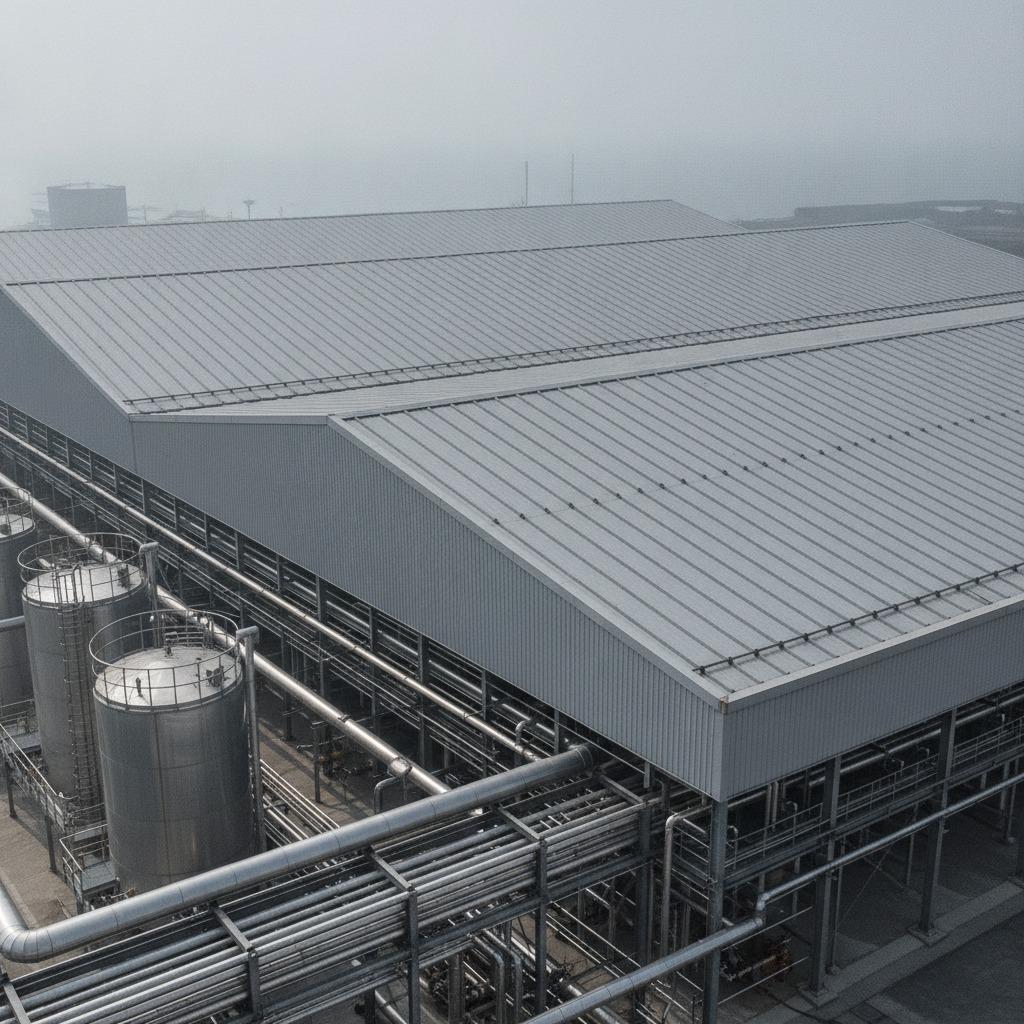
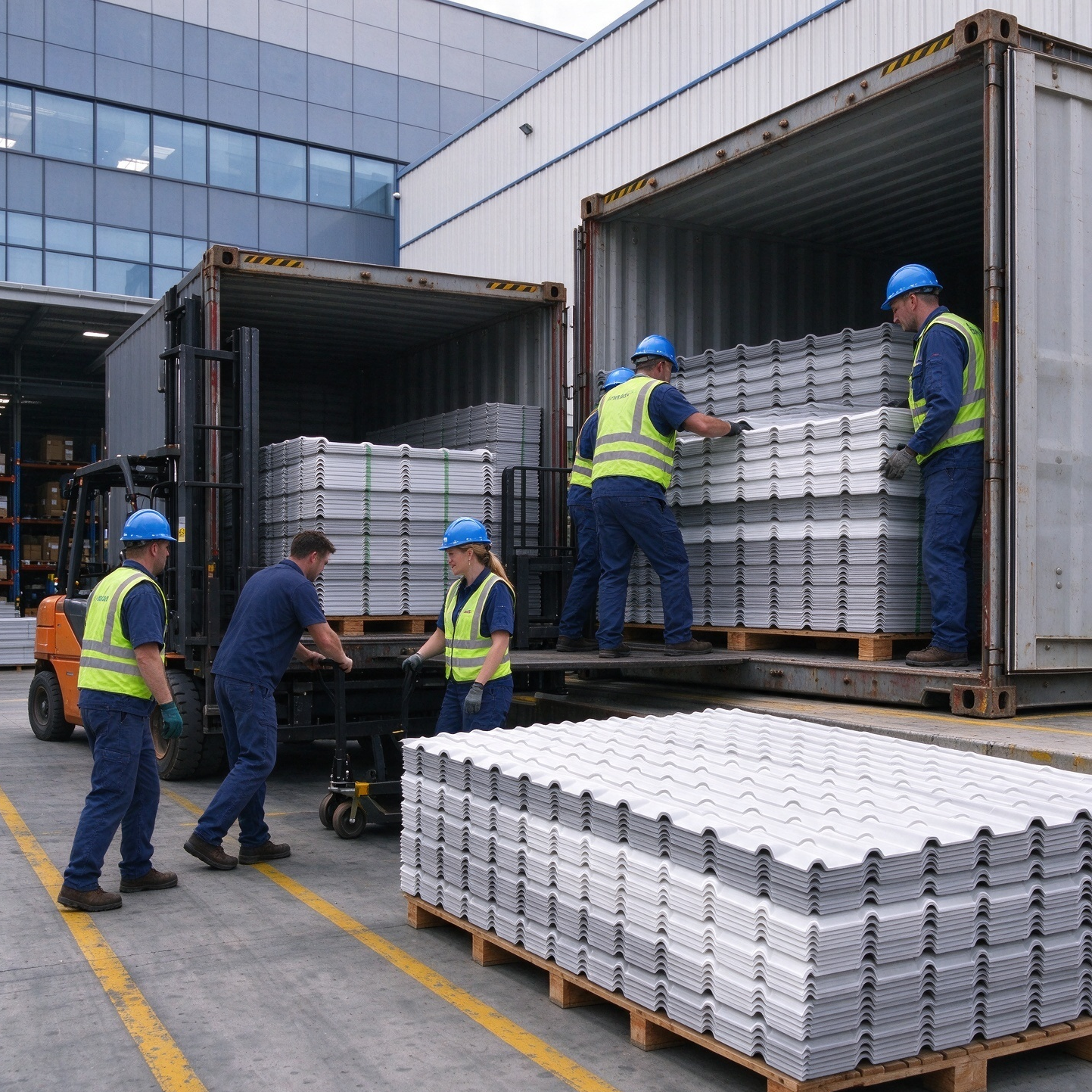
Walk through any coastal chemical processing depot or fertilizer warehouse after five years of operation, and the vulnerabilities of conventional roofing reveal themselves in stark rust stains, rusted-out fastener holes, and delaminated coatings. Where marine salinity and industrial vapors chew through galvanized metal in a handful of seasons, plant engineers increasingly turn to polymer extrusion. Finding a dependable PVC synthetic resin roof tile manufacturer is not merely a purchasing exercise—it is a hedge against structural corrosion and costly production interruptions.
The Architecture of Co-Extrusion: ASA Meets PVC
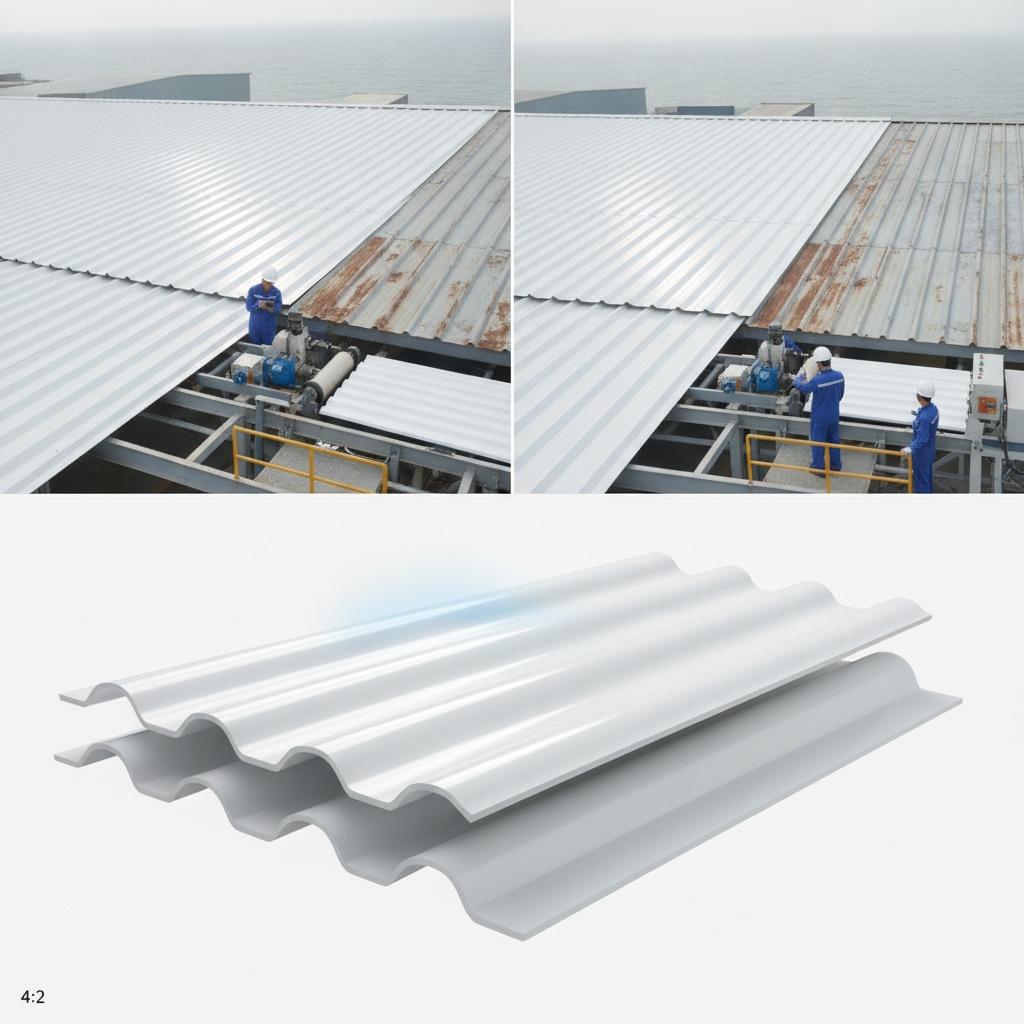
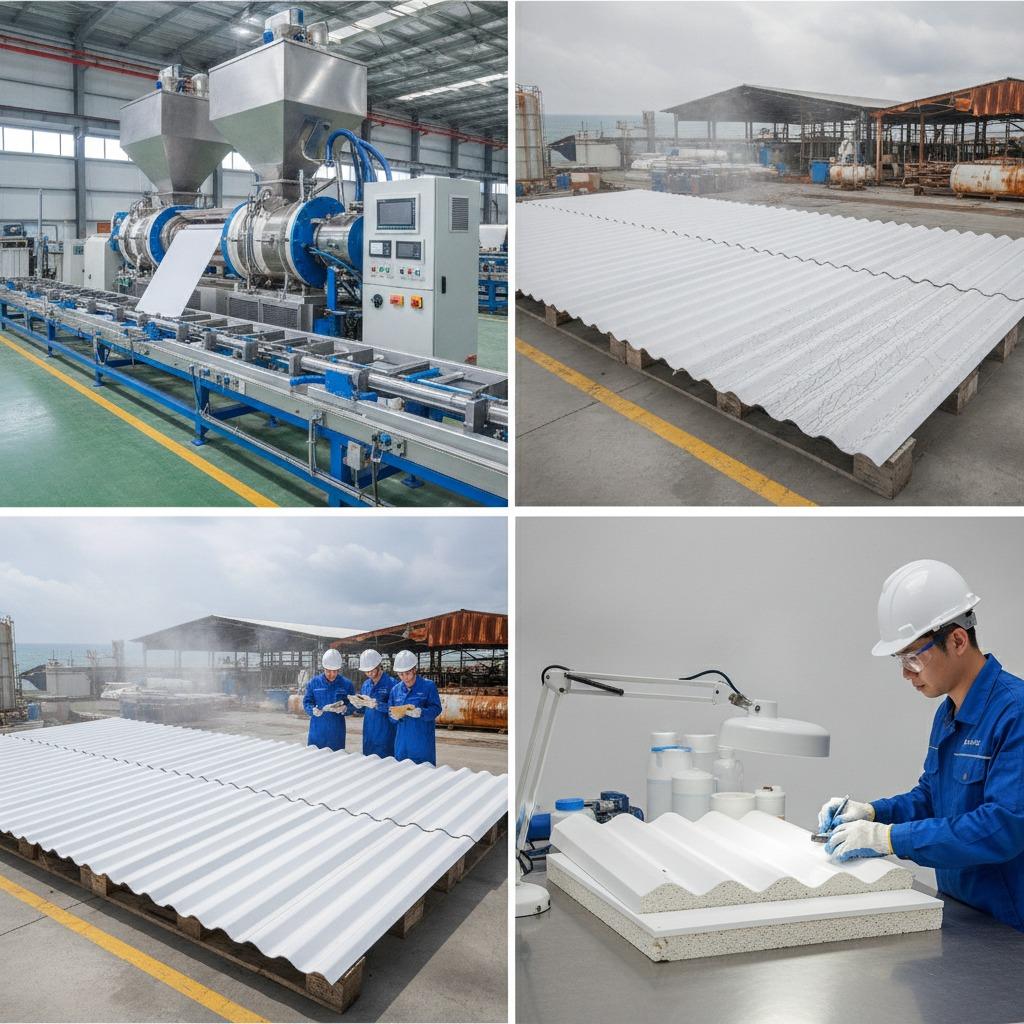
To evaluate these tiles objectively, one must look at their cross-section under magnification. High-performance composite roofing is rarely a homogeneous slab of plastic. Instead, it relies on multi-layer co-extrusion where distinct polymer formulations bond under heat and pressure at the extrusion die.
The weather-facing skin—typically measuring between 0.15 mm and 0.25 mm—is composed of Acrylonitrile Styrene Acrylate (ASA). When sourced from a competent ASA synthetic resin roof tile manufacturer, this outer layer acts as an impermeable shield. ASA carries an inherently high resistance to solar ultraviolet degradation; its terpolymer matrix preserves pigment saturation and resists the surface micro-cracking that leaves ordinary plastics faded and chalky within two summers. Beneath this decorative barrier lies the structural backbone: a modified polyvinyl chloride (PVC) core, often engineered with specific impact modifiers, foaming agents for thermal insulation, and stabilizers that grant rigidity across wide purlin spans without sagging under midday heat.
Behind the Factory Doors: What Separates Premium Tiles from Cheap Extrusions
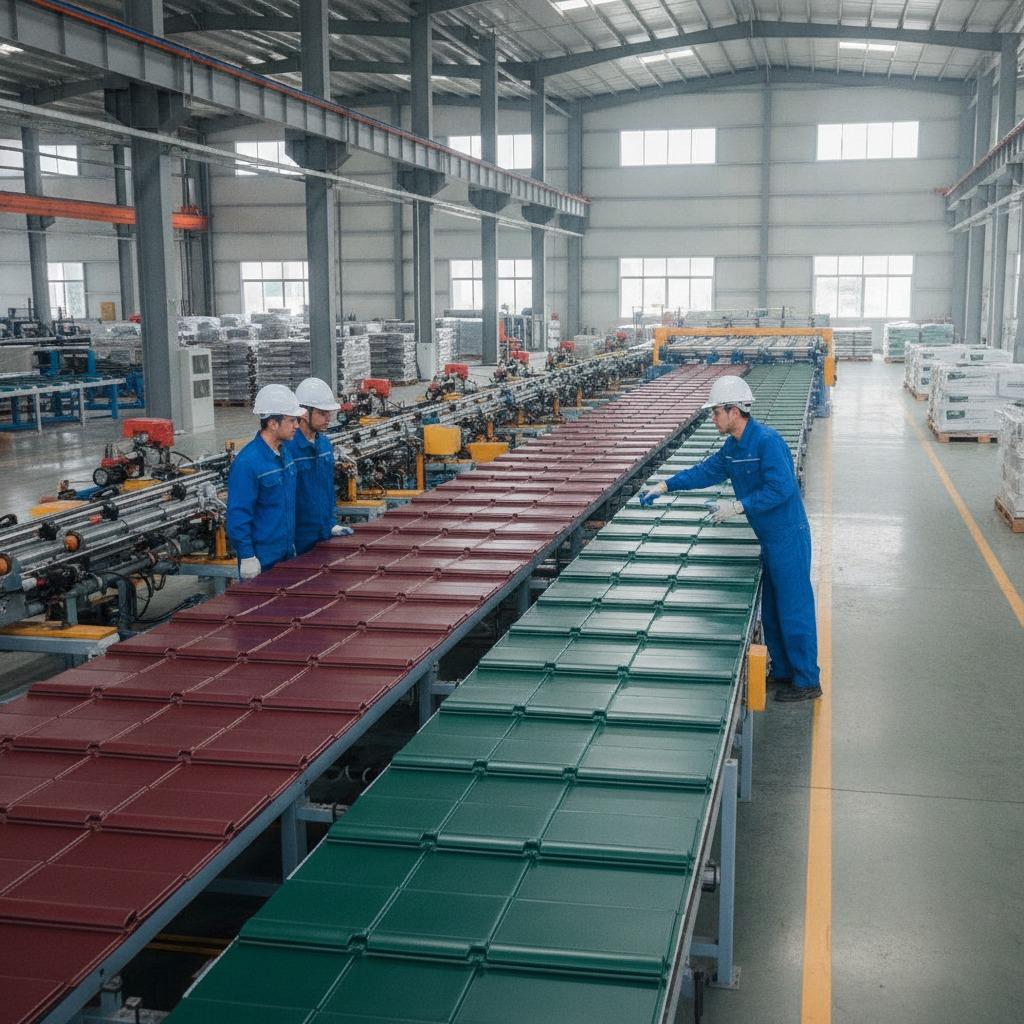
On an active factory floor, the line between an industrial-grade panel and a budget residential sheet comes down to raw material formulation and process discipline. As extruders hum and pull molten sheets through vacuum forming dies, two critical variables dictate field longevity:
- Filler Ratios (Calcium Carbonate Content): Heavy loadings of CaCO3 cut resin costs dramatically, but turn the finished tile brittle. A quality tile flexes under mechanical load without snapping and maintains elasticity when chilled. Over-filled tiles sound hollow and dry when tapped; under cold-weather impacts or hail strikes, they puncture rather than deflect.
- Regrind Integrity: While closed-loop recycling of internal edge trims is standard practice, an irresponsible synthetic resin plastic roof tile manufacturer may introduce contaminated post-consumer scrap into the core layer. This introduces internal voids and thermal instability, leading to warping along the longitudinal seams once exposed to diurnal temperature swings.
- Die Calibration and Thickness Uniformity: Consistent gauge across the entire profile—from the crown of the corrugation to the trough—ensures that mechanical fasteners seat square without crushing the profile valley.
Field Performance Under Stress: Thermal and Chemical Environments
Standard profile sheets must endure harsh thermal cycling. Polymers expand and contract at rates significantly higher than steel purlins. A qualified synthetic resin roof tile manufacturer will formulate their core layer to minimize thermal movement, but engineering teams must still accommodate this physical reality in the roof design.
Oval pre-drilled screw holes, specialized EPDM waterproof caps, and controlled fastener torques are non-negotiable details. In electroplating workshops, pickling plants, and livestock barns where ammonia concentrations quickly corrode painted metal, synthetic resin remains virtually inert. It does not pit, it does not foster algae growth on its dense, non-porous skin, and it significantly dampens the deafening percussion of heavy rain that plagues bare trapezoidal sheet metal.
Buyer's Sourcing Checklist for Industrial Projects
When vetting suppliers for an upcoming industrial expansion or warehouse re-roofing project, look past glossy brochures and demand verifiable production parameters:
- ASA Raw Material Traceability: Ask which polymer supplier provides the surface ASA resin pellets (e.g., internationally recognized resin producers). A manufacturer unwilling to share their resin lineage is likely using unbranded or blended polymers.
- Measured Surface Layer Thickness: Request micro-section test reports or optical gauge verification. An ASA cap thinner than 0.12 mm risks wearing through prematurely under wind-borne grit abrasion.
- Fire Retardancy Classification: Verify self-extinguishing behavior. Rigorous formulations achieve UL 94 V-0 or equivalent national building standard ratings (such as Class B1 flame retardancy), ensuring the panels do not propagate flame across the roof deck.
- Warranty Terms vs. Operating Environment: Read the small print. Does the warranty cover coastal exposure within 500 meters of the waterline, or does it carry blanket exclusions for high-salinity zones?
Frequently Asked Questions
Can synthetic resin tiles be walked on directly during maintenance?
Direct point loading on the profile crests should be avoided. While high-grade tiles easily support snow loads and distributed maintenance crews, best roofing practice mandates walking boards or duckboards spanning across the purlins to prevent localized stress fractures.
How does ASA-PVC roofing handle extreme sub-zero winters?
Standard PVC experiences reduced impact strength near and below freezing. However, premium formulations incorporate chlorinated polyethylene (CPE) or acrylic impact modifiers that preserve sufficient ductility down to -30°C. If your job site experiences heavy winter freeze-thaw cycles, confirm the low-temperature impact test data with the plant's lab.
What is the typical purlin spacing recommended for these profiles?
For standard 2.5 mm to 3.0 mm sheet thicknesses, purlin spacing typically ranges between 660 mm and 800 mm depending on anticipated wind uplift and live loads. Pushing spans beyond 900 mm risks visible mid-span deflection during peak summer ambient temperatures.
Moving Forward with Procurement
Selecting roofing panels requires matching physical polymer characteristics directly to the atmospheric realities of your site. Before committing to high-volume container shipments, request master samples from production runs, inspect the cut-edge layering with an optical loupe, and conduct direct laboratory testing on sheet density and tensile flexure.