Step inside an electroplating facility or a coastal chemical transshipment terminal, and you will immediately notice what the ambient air does to standard building envelopes. Acid fumes and salt-heavy mist bite into exposed metal purlins, chewing through standard coated steel sheets until they flake into rust and pinhole leaks. For procurement managers and plant engineers facing these corrosive realities, partnering directly with a dedicated pvc roof panel manufacturer is rarely just a line-item material switch; it is a defensive engineering strategy against relentless atmospheric degradation.
The Anatomy of Modern Co-Extrusion
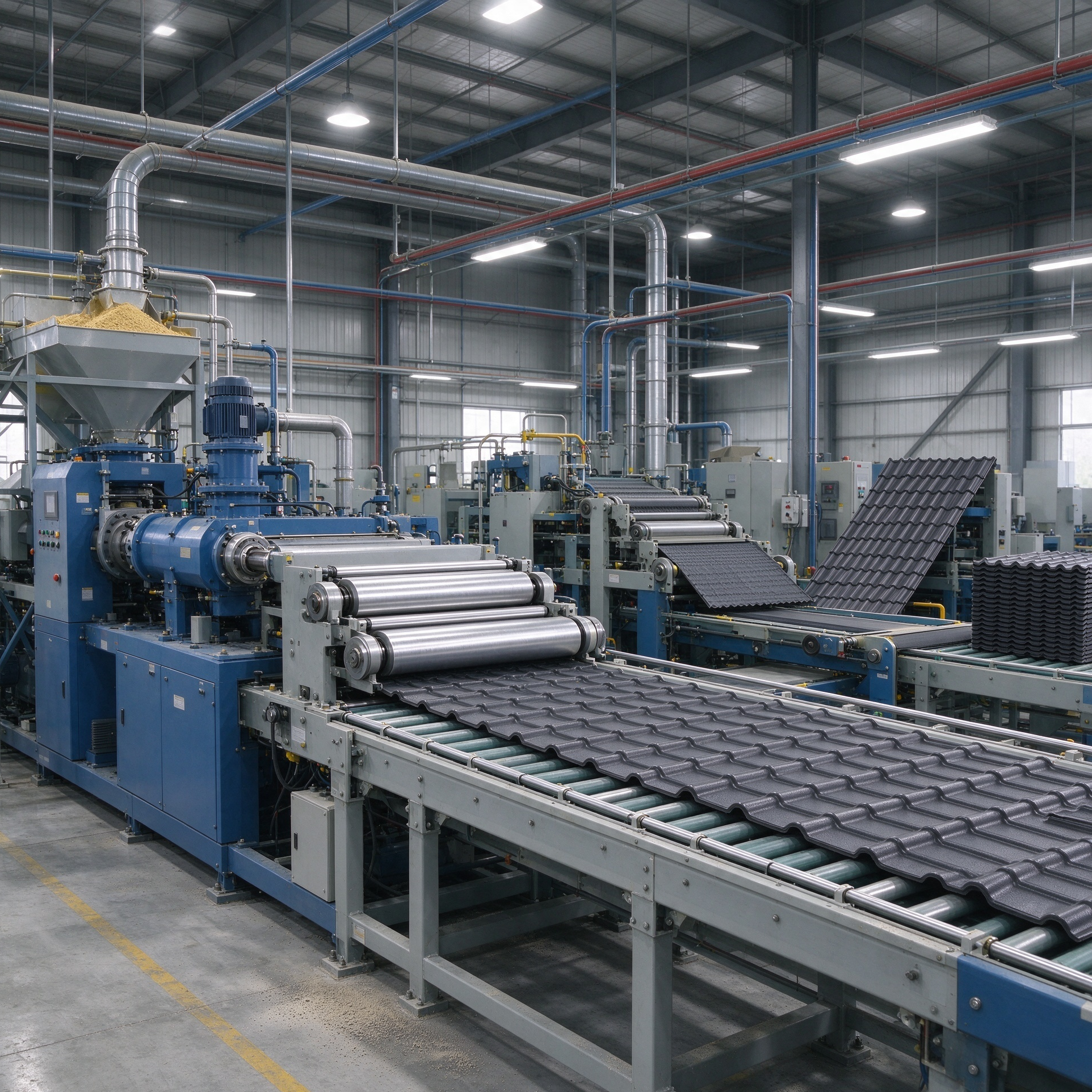
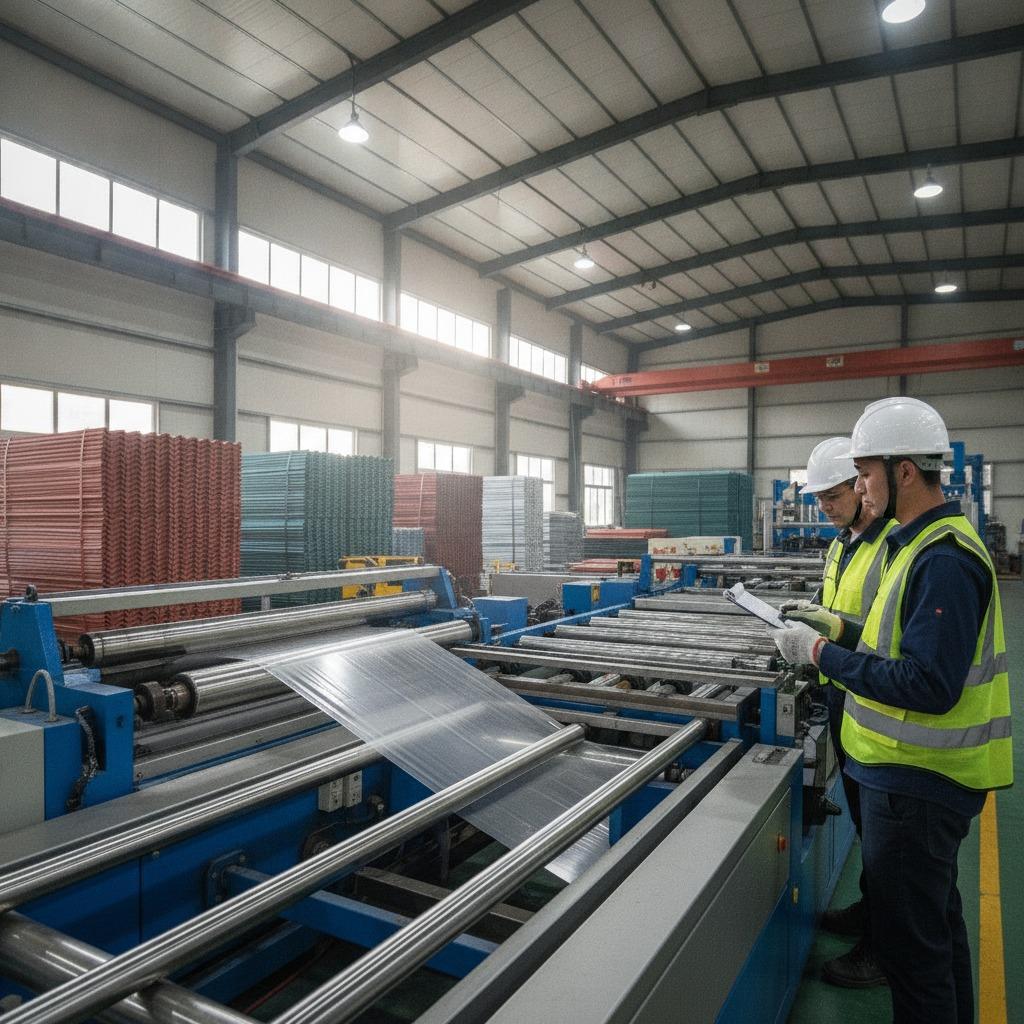
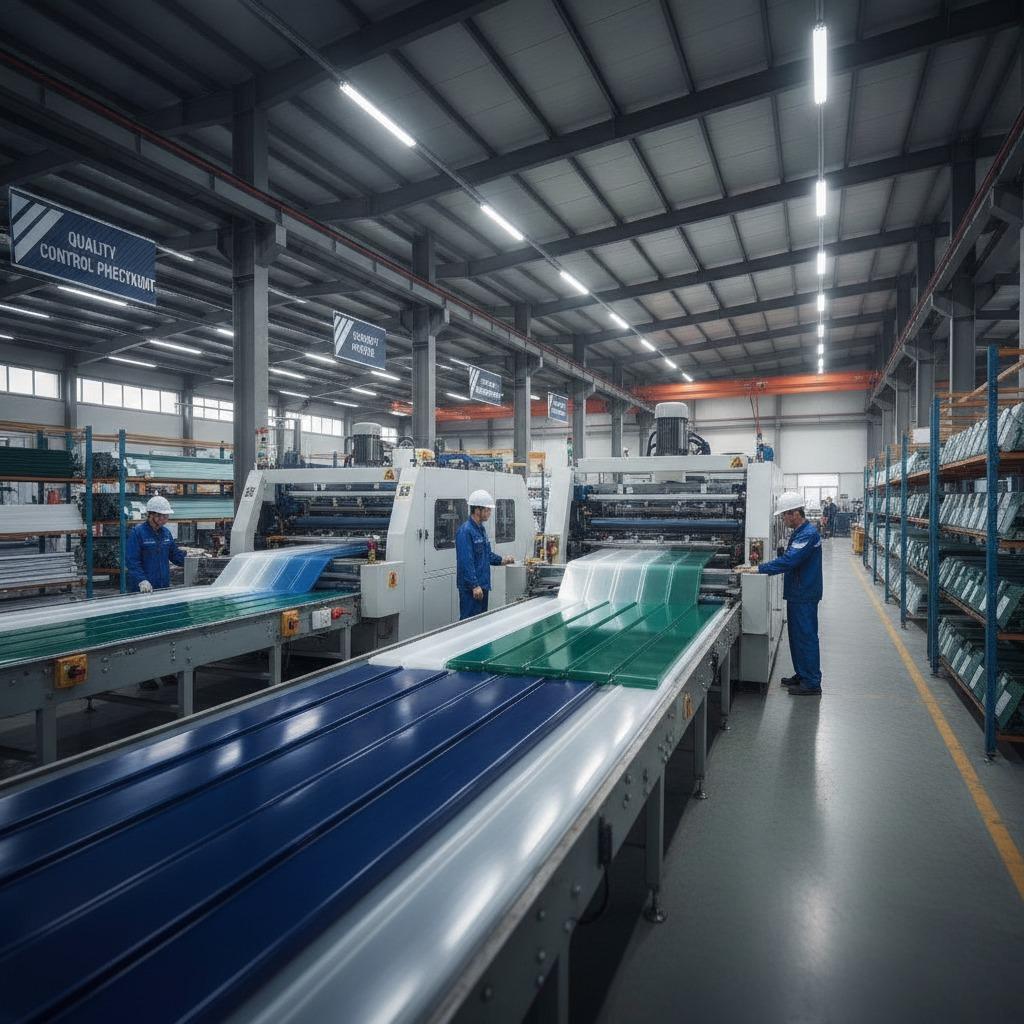
To understand why industrial polymer roofing survives where light-gauge metal fails, you have to look closely at the extrusion floor. High-performance industrial PVC panels are rarely single-polymer slabs anymore. Modern lines lean heavily on three- or four-layer co-extrusion, where molten thermoplastics merge under immense pressure inside a multi-manifold flat die before passing through precision profiling chill rollers.
The weather-facing exterior is typically capped with an ASA (acrylonitrile styrene acrylate) or an ultra-dense, fluorocarbon-doped PVC compound. This surface cap catches the brunt of solar radiation. Under high magnification, this layer forms an impermeable shield that locks out UV rays, preventing the chalking, micro-cracking, and color fading that plagued early-generation vinyl roof sheets. Beneath this armor lies the structural core: rigid polyvinyl chloride compounded with chlorinated polyethylene or acrylic impact modifiers. This core delivers the flexural modulus and flexural yield strength needed to handle live snow loads, high wind uplift, and the occasional footstep of an errant maintenance technician. The bottom layer, exposed to the interior room climate, focuses entirely on chemical inertness—resisting ammonia washdowns in agricultural barns or volatile organic compounds rising from manufacturing vats below.
Vetting a PVC Roofing Panel Manufacturer at the Factory Level
Not every plant running an extrusion line produces panels suitable for heavy industrial duty. When vetting a potential pvc roofing panel manufacturer, sourcing teams should look past the glossy product brochures and interrogate the raw material blending and compounding process.
One of the most frequent compromises in polymer manufacturing occurs right at the resin scale: the over-addition of calcium carbonate (CaCO3). Calcium carbonate serves as an inexpensive filler. A moderate amount improves dimensional stability and reduces raw polymer costs. However, when a manufacturer pushes the filler ratio too far to undercut competition on unit price, the panel forfeits its ductile resilience. The composite becomes brittle, prone to micro-fissuring during thermal contraction cycles, and easily shattered by wind-driven hail. During a technical audit or sample review, ask specifically about density metrics, ash test percentages, and the balance of virgin versus regrind polymer.
A reputable pvc roof panel manufacturer should also be fully transparent about their UV stabilization package. Titanium dioxide (rutile grade) and targeted hindered amine light stabilizers (HALS) do not come cheap. Without them thoroughly dispersed throughout the melt matrix, long-term exposure to high-UV environments leaves panels structurally compromised within four or five seasons.
Field Performance in Hostile Microclimates
Consider the daily operational realities of a bulk fertilizer warehouse. Fertilizer dust absorbs moisture from the air, creating a dense, highly electrolytic brine that clings to the roof substructure. In these environments, metal sheeting—even high-end PVDF-coated steel—eventually suffers edge creep, where rust creeps inward from every cut edge and screw penetration. Polymer panels eliminate this vulnerability entirely. The material is chemically homogeneous at the cut line; there is no exposed metal substrate to oxidize.
Similar benefits play out in commercial livestock housing, where airborne ammonia from animal waste rapidly strips galvanized coatings, and in wastewater treatment covers where hydrogen sulfide gas converts into dilute sulfuric acid on the panel underside. PVC simply does not react to these chemical pathways, ensuring the structural skin remains water-tight year after year.
Thermal Realities and Structural Fastening
Sourcing engineers must remember that polymers behave very differently than steel when the temperature swings. The coefficient of thermal linear expansion for unreinforced PVC is considerably higher than that of structural carbon steel. On a long roof run subjected to a freezing winter morning followed by intense direct afternoon sun, panels will expand and contract noticeably along their length.
A seasoned manufacturer will always provide precise fastening guides rather than treating polymer sheets like standard corrugated iron. Fixing holes must be pre-drilled oversized—typically two to three millimeters wider than the screw shank—and centered accurately. Over-torquing self-drilling screws can pinch the panel tight against the purlin, preventing the necessary thermal slip and leading to localized buckling or stress cracks radiating from fastener penetrations. Large-diameter EPDM sealing washers and saddle clips are essential to distribute localized wind suction forces without crushing the profile crown.
Practical Checklist for Factory Audits
Before issuing a volume purchase order, ensure your supplier can provide tangible verification across these operational factors:
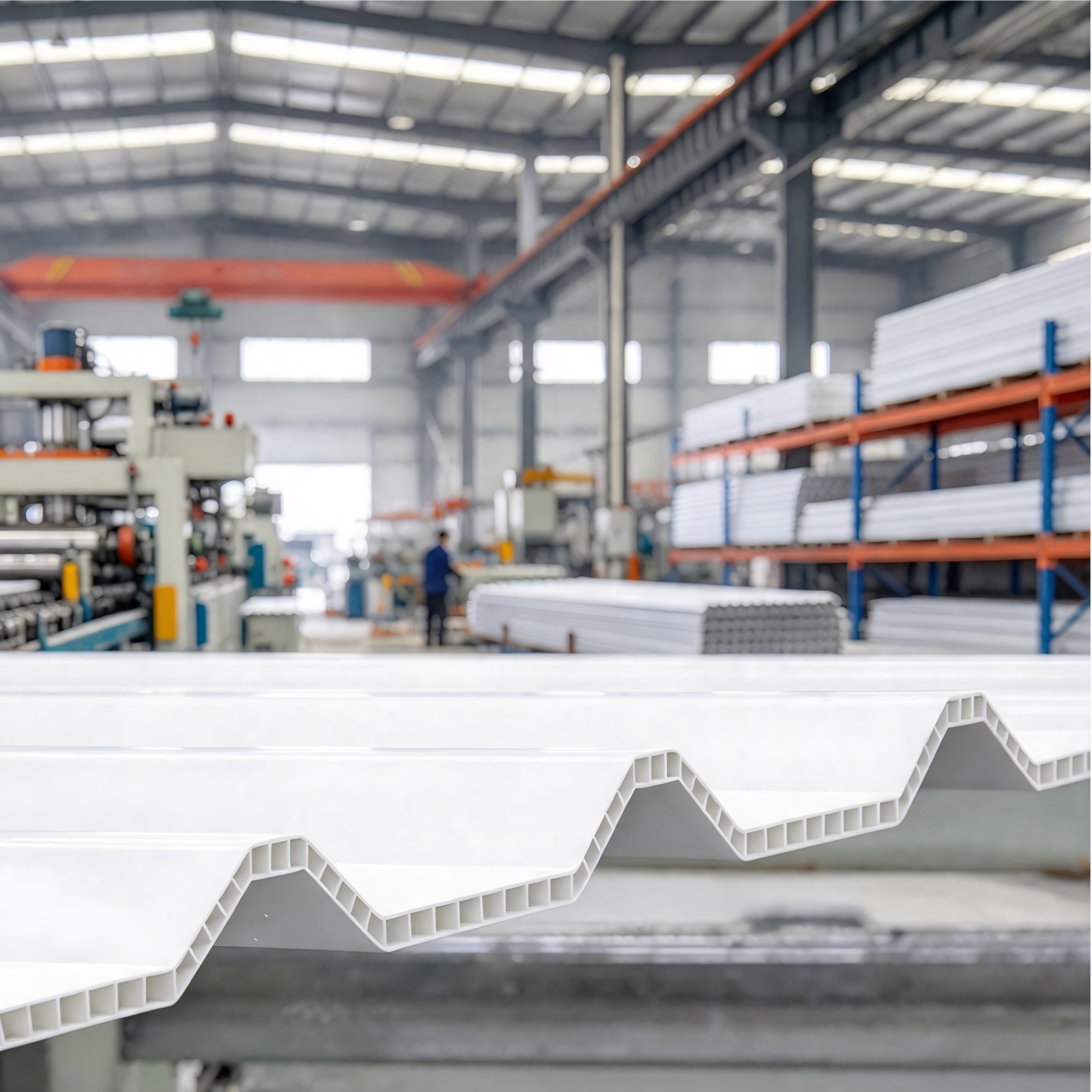
- Continuous Profile Uniformity: Inspect the sheet cross-section across the entire width. Check for uniform wall thickness along corrugation peaks, valleys, and side laps. Uneven wall thickness signals poorly balanced extrusion dies or slipping haul-off caterpillars.
- Impact Recovery at Low Temperatures: Ask for falling-dart impact test documentation, especially if the panels will be installed in regions subject to sub-zero winters.
- Color Match and Surface Gloss Consistency: Inline spectrophotometer records demonstrate whether the manufacturer maintains strict control over masterbatch pigment feeding.
- Fastener and Accessory Compatibility: Confirm whether the supplier provides matched ridge caps, flashing profiles, and engineered fasteners designed specifically for polymer expansion dynamics.
Frequently Asked Questions
Can PVC roof panels handle direct foot traffic during maintenance?
Direct walking on roof panels should always be avoided, regardless of material. While high-grade PVC sheets possess substantial impact resistance, personnel should always use crawling boards or walk boards positioned across purlins to distribute weight safely during roof inspections.
How do high-performance PVC panels behave in fire scenarios?
Rigid PVC is naturally flame-retardant due to its high chlorine content. It typically achieves self-extinguishing characteristics once the direct flame source is removed. However, sourcing teams must review project-specific building codes and request third-party flammability test reports (such as UL 94 or regional standard flame spread classifications) directly from the supplier.
Next Steps for Your Project
Balancing initial capital outlay against multi-decade maintenance costs requires clear data from the factory floor. If your facility deals with high humidity, chemical outgassing, or marine corrosion, request physical cut samples and batch specification sheets from your prospective pvc roof panel manufacturer. Testing these samples against your specific plant chemicals will tell you far more than any data sheet ever could.