Beyond the Color Chip: What Sourcing Teams Miss in Co-Extruded Roofing
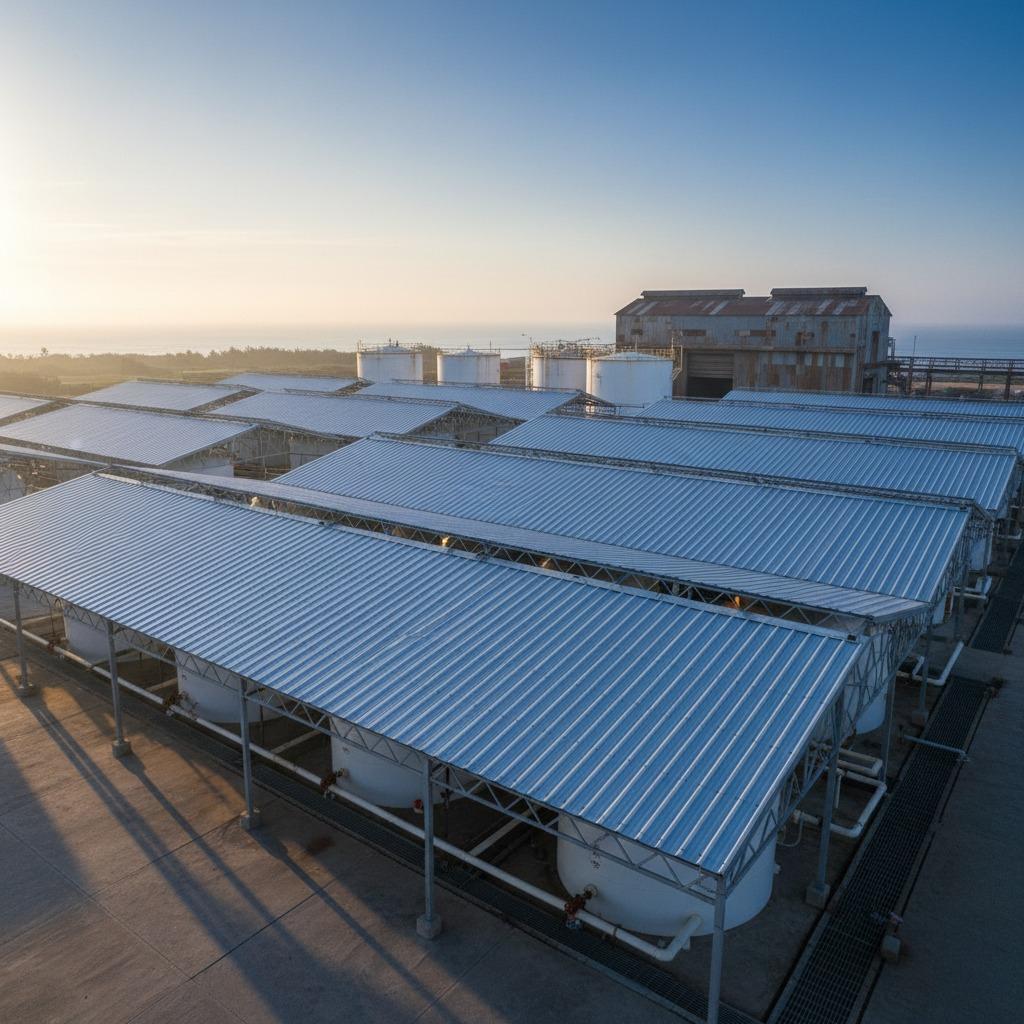
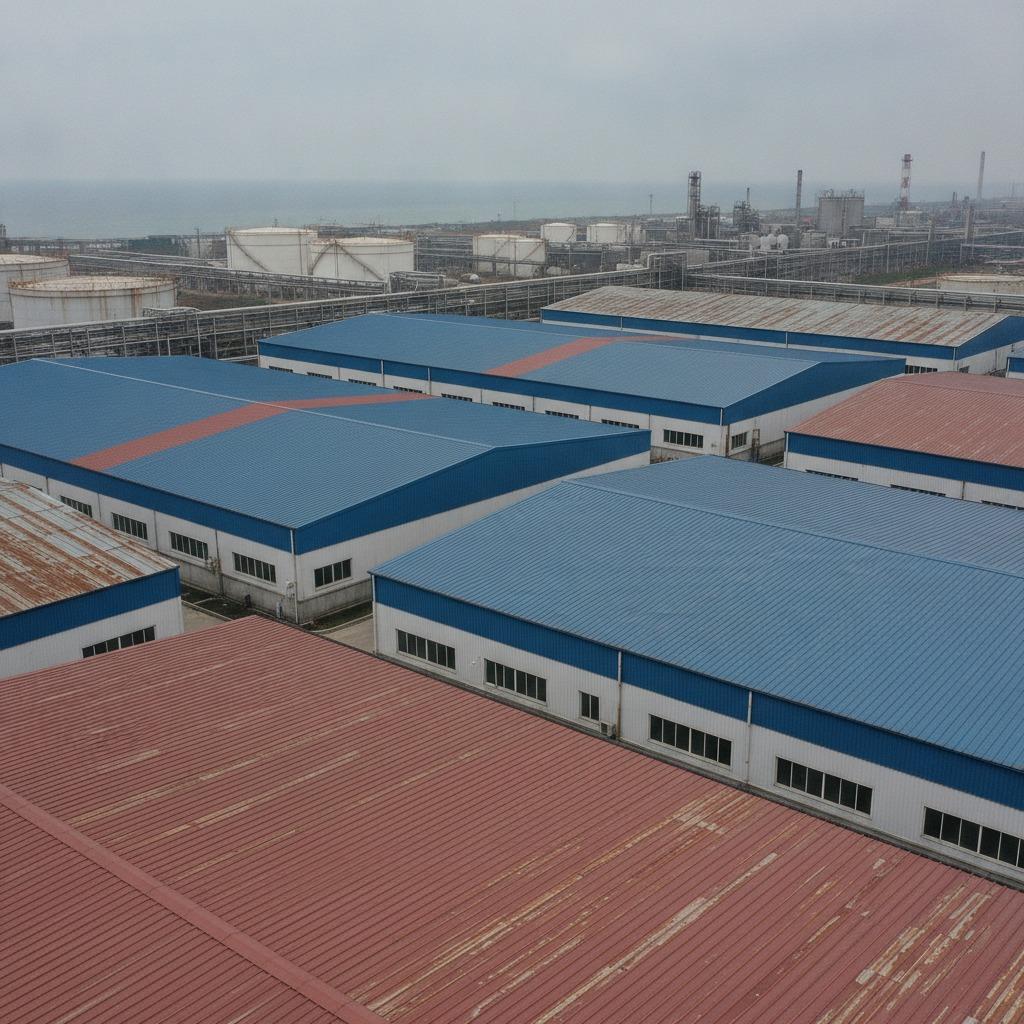
Walk through any coastal chemical processing zone or industrial port, and you can smell the salt fog and sulfur dioxide eating away at standard corrugated steel. Within thirty-six months, galvanized paneling often displays telltale red-orange rust streaks around drill holes, while painted coatings bubble and flake under relentless solar radiation. This corrosion cycle has driven industrial fabricators, commercial builders, and agricultural developers toward co-extruded polymer roofing. Yet, tracking down a reliable ASA PVC roof tile supplier involves far more than comparing brochure color swatches or checking wholesale square-meter rates. The gap between a tile that maintains its color saturation for two decades and one that turns brittle and chalky after three summers lies buried deep inside the extrusion barrel and the resin blend.
The Architecture of an ASA/PVC Profile
To understand what makes these composite panels perform, inspect a fresh cross-section under angled shop lighting. A properly engineered panel is not a monolithic piece of plastic; it is a carefully calibrated multi-layer sandwich produced through co-extrusion dies.
The ASA Weathering Cap
On the exterior face sits Acrylonitrile Styrene Acrylate (ASA). Where standard PVC degrades and discolors under aggressive ultraviolet exposure, the acrylate rubber phase inside ASA shrugs off UV radiation. A qualified PVC roofing supplier ensures this top layer measures consistently between 0.15 mm and 0.20 mm in thickness. Skimping here—dropping the cap below 0.10 mm to save resin cost—leaves the underlying polyvinyl chloride vulnerable to rapid photo-oxidation, leading to premature micro-cracking and loss of luster.
The Structural PVC Core
Directly beneath that colorful ASA skin lies the rigid PVC structural core. This layer carries the structural load, controls thermal expansion, and provides impact dampening against hail. Sourcing engineers should inspect the density and flexibility here. Reputable manufacturers formulate this layer with balanced impact modifiers and carefully measured heat stabilizers. When an unvetted PVC roof tile supplier overloads this base layer with cheap calcium carbonate filler to cut production overhead, the sheet loses its tensile resilience, behaving more like chalky slate than impact-resistant synthetic resin.
Auditing Production: What Separates Good Extruders from Scrap Re-grinders?
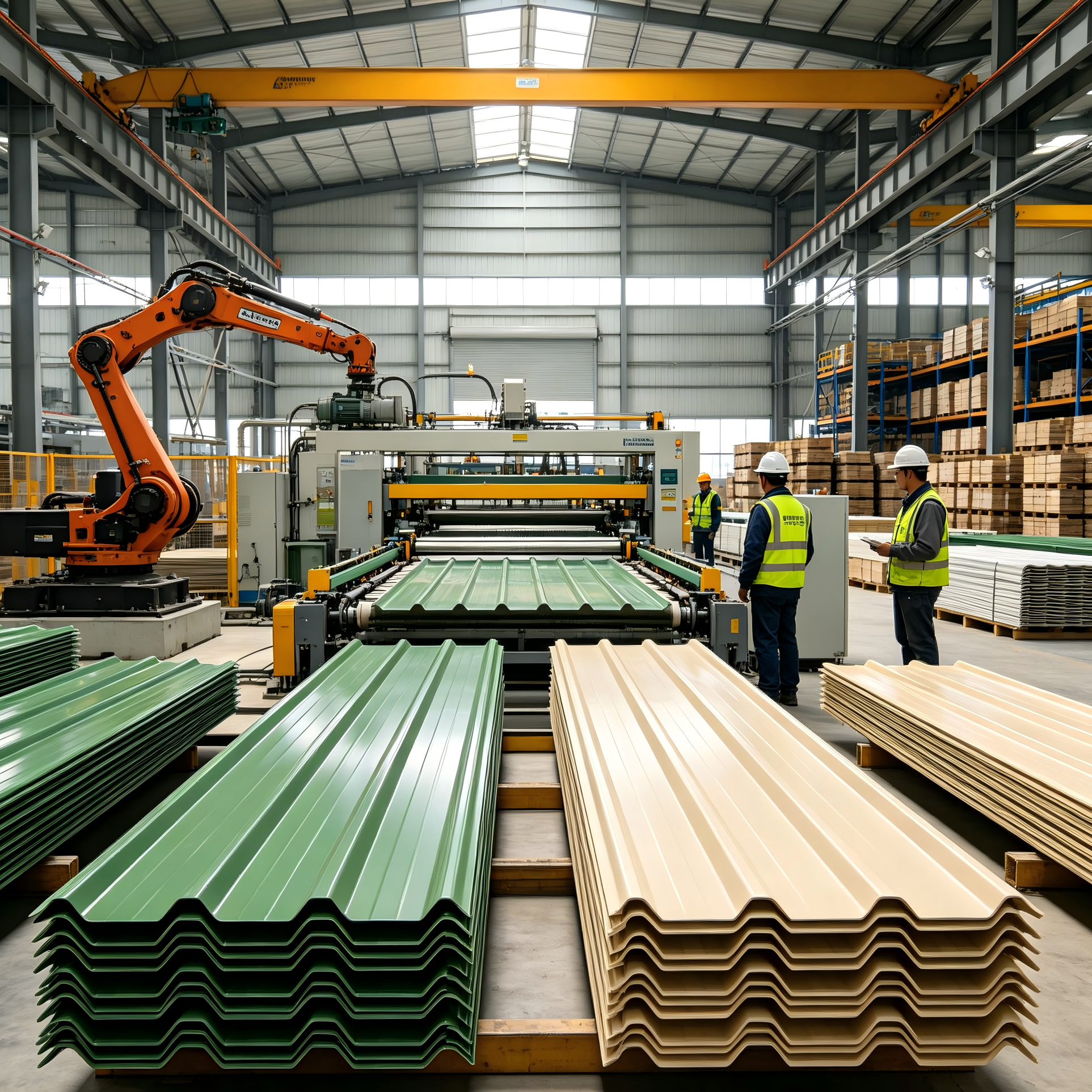
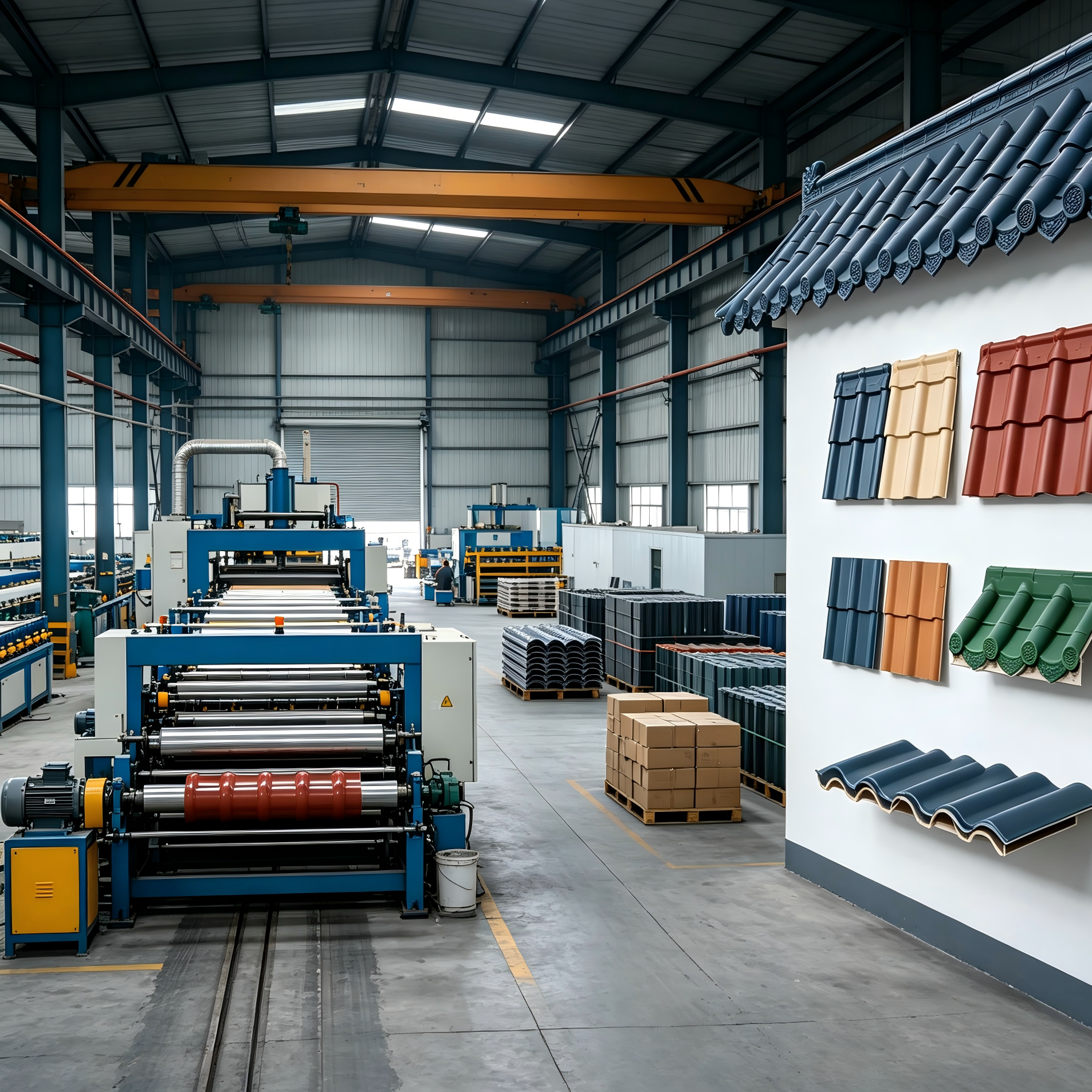
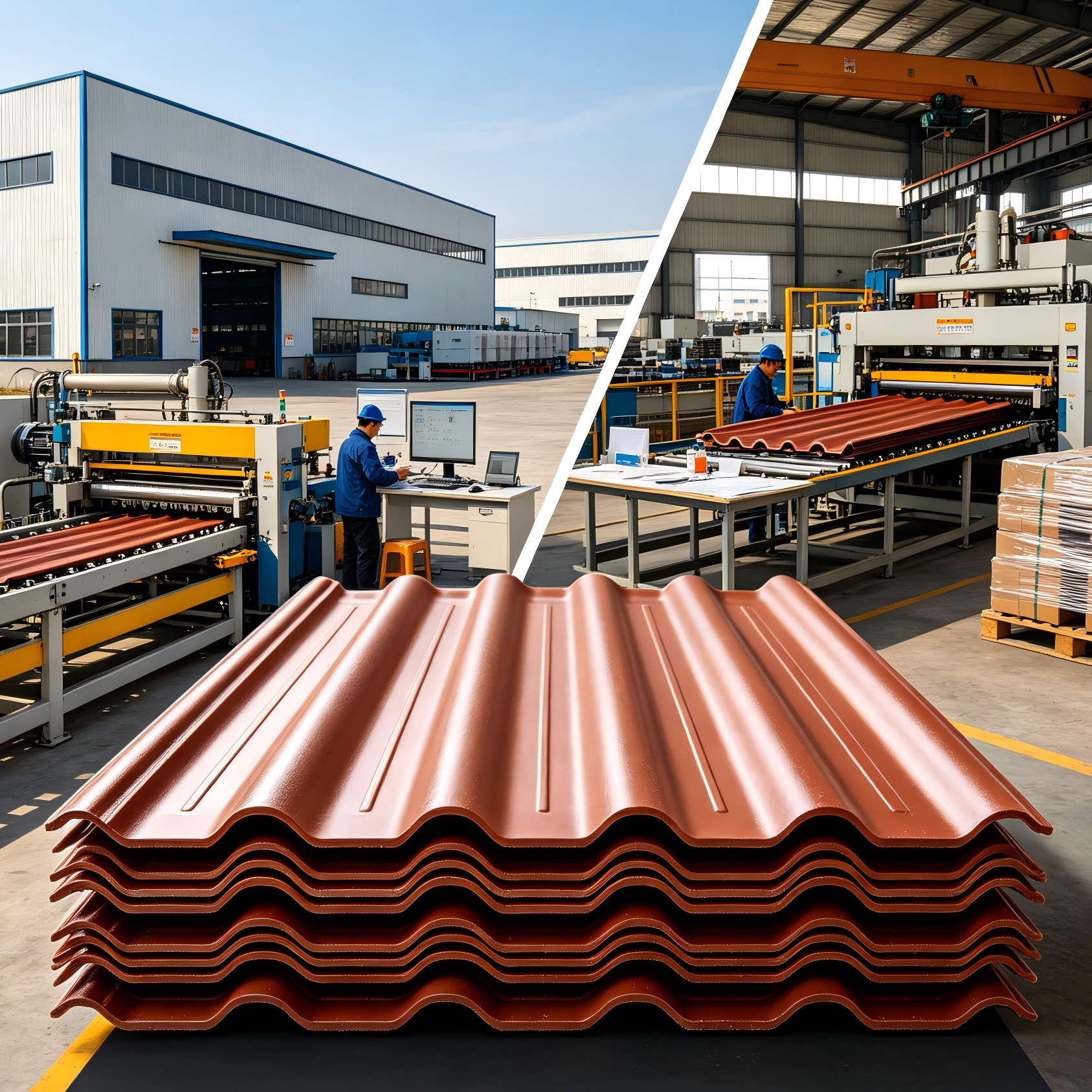
Touring an extrusion facility reveals everything you need to know about long-term product integrity. Watch how raw materials enter the plant. Does the PVC roof supplier run certified virgin resin blends from reputable petrochemical suppliers, or do gaylord boxes filled with inconsistent post-industrial regrind clutter the blending mezzanine? While a modest percentage of cleanly recycled in-house edge trim is standard practice, dumping unregulated post-consumer plastics into the base core destroys structural predictability.
Notice the cooling calibration tanks and haul-off equipment. Multi-wave Spanish profiles and trapezoidal industrial sheets must exit the shaping dies and cool uniformly. If water spray nozzles along the vacuum sizing tank are clogged or unevenly spaced, internal stresses become locked into the plastic matrix. The tile may look straight when packed into a shipping container, but the moment it experiences mid-day 45°C ambient roof temperatures, internal memory releases, causing panels to warp, bow, or leak at lap joints.
Application Realities: Where These Panels Earn Their Keep
Sourcing managers frequently specify these synthetic profiles for installations that routinely destroy traditional coated metal:
- Fertilizer & Chemical Warehouses: Acid vapors, ammonia off-gassing, and airborne alkaline dust react aggressively with zinc and aluminum. Polyvinyl chloride remains essentially inert in these environments.
- Commercial Livestock Housing: Swine and poultry barns generate humid, high-ammonia microclimates. ASA-capped tiles eliminate the undersheet corrosion that rusts steel fasteners and purlins from the inside out.
- Coastal Marine Environments: Salt spray drives electrolytic corrosion on standard sheet metal. Polymer composites offer zero electrical conductivity and zero galvanic oxidation.
Critical Red Flags When Evaluating a PVC Roofing Tiles Supplier
Experienced procurement teams look for several operational warning signs before signing high-volume supply contracts:
Unrealistic Weight Reductions: If a vendor quotes a sheet thickness of 2.5 mm or 3.0 mm but lists a weight noticeably lighter than competitor averages, they are either aerating the core with excessive foaming agents or running underweight wall profiles that compromise purlin span ratings.
Inconsistent Pigmentation at the Overlaps: Pull random sample sheets and examine the cut edges and lap corridors under daylight. Color variations from batch to batch signal that the supplier is using manual batch mixing rather than automated gravimetric dosing for color masterbatches.
Reluctance to Provide Accelerated Weathering Data: A reputable ASA PVC roof tile supplier should readily supply third-party xenon arc or QUV test documentation verifying delta-E color shift thresholds over thousands of exposure hours.
Procurement Checklist: Essential Questions for Factory Audits
Before issuing a purchase order for multiple shipping containers, pose these direct questions to the factory engineering lead:
1. What brand and grade of ASA resin is dedicated to the cap extruder, and what is your verified minimum cap thickness across the high-profile ridges?
2. What is the specific gravity of the finished composite sheet, and what is the exact calcium carbonate load percentage in the core formulation?
3. What expansion clearance tolerances do you specify in your installation guide for long-run sheets spanning structural steel purlins?
Frequently Asked Questions
How do ASA-capped tiles handle extreme seasonal temperature swings?
Like all thermoplastic materials, PVC exhibits a higher thermal expansion coefficient than structural steel. Quality sheets handle this through dedicated expansion slots and broad-washered fastener assemblies. The ASA cap retains its ductile properties down to sub-zero temperatures, preventing cold-shatter during winter freeze-thaw cycles.
Can standard fasteners be used during installation?
No. Direct through-screwing without thermal allowance is the primary cause of cracked panels and water ingress. Experienced suppliers bundle specialized waterproof tapping screws equipped with oversized EPDM sealing washers and UV-resistant cap covers that shield the fastener head.
Establishing Your Next Supply Chain Partnership
Evaluating polymer roofing requires looking past glossy catalog spreads and digging into resin purity, co-extrusion layer control, and die engineering. If your upcoming commercial, industrial, or distribution project demands long-term resilience against corrosive airborne chemicals or intense coastal sun, request full-profile physical cross-section samples, verify pigment stability data, and vet your prospective manufacturing partner on the factory floor.