Procuring cladding and roofing for corrosive environments—such as fertilizer plants, coastal warehouses, livestock housing, or chemical processing facilities—frequently exposes the limitations of galvanized or coated steel. While coated metal inevitably succumbs to edge creep and rust over time, polyvinyl chloride panels offer genuine inertness to acid mist, ammonia, and marine salt air. However, choosing the right PVC roof panel supplier involves far more than simply comparing sheet thickness and cost per square meter. A panel that appears robust on a sample board can chalk, sag, or shatter within three seasons if the supplier cuts corners on compounding additives or relies too heavily on recycled regrind.
For engineers and sourcing managers, distinguishing between a dependable manufacturer and a low-grade compounder requires looking beneath the profile into resin chemistry, extrusion stabilization, and structural tolerances.
Material Chemistry: What Separates Long-Life Panels from Fast Failures?
Unlike structural metals where chemistry is tightly standardized across standard mill specs, PVC roofing formulation varies drastically across manufacturers. Polyvinyl chloride itself is inherently rigid and brittle unless modified, and it naturally degrades under ultraviolet radiation unless properly shielded.
When evaluating a supplier's production lines, examine two primary technical factors:
1. Co-Extrusion and Capping Technology (ASA vs. Uncapped PVC)
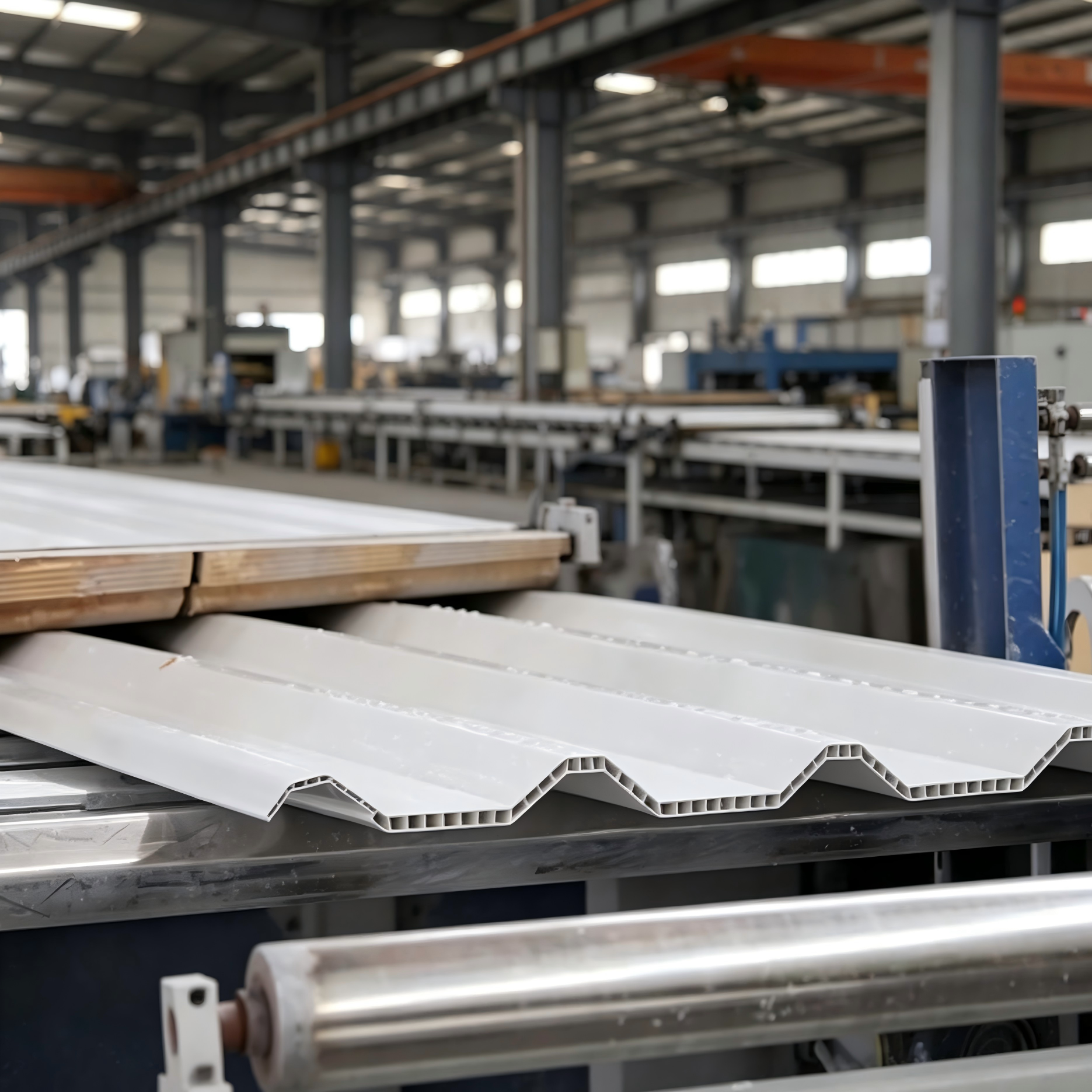
Single-layer PVC panels rely on UV stabilizers dispersed throughout the entire cross-section. While cheaper, this method leaves surface resin vulnerable to gradual binder degradation, which causes fading, micro-cracking, and surface chalking. Premium manufacturers employ multi-layer co-extrusion technology, typically applying an Acrylonitrile Styrene Acrylate (ASA) or specialized fluoropolymer outer cap layer. ASA provides exceptional weatherability and color retention, allowing the underlying PVC core to focus purely on structural rigidity and impact resistance.
2. The Calcium Carbonate (CaCO3) Dilemma
To lower production costs, compounders frequently blend calcium carbonate into the PVC resin. A modest percentage acts as an effective processing aid and helps control shrinkage. However, unregulated suppliers often increase mineral filler content past 20% or 30%. The result is a heavy, chalky, and dangerously brittle sheet that lacks tensile flexibility. Ask prospective vendors for density figures: standard industrial PVC panels typically sit near 1.35 to 1.45 g/cm³. If a vendor's technical data sheet lists density well above 1.55 g/cm³ without fiberglass reinforcement, the formulation is heavily overloaded with filler.
Key Performance Metrics to Demand Before Issuing an RFQ
Reliable suppliers will readily produce third-party laboratory test reports rather than self-certified internal spec sheets. Sourcing teams should focus on four baseline indicators:
- Impact Strength: Evaluated via falling dart or Charpy impact tests, especially under low ambient temperatures (0°C to -10°C). Brittle panels fail rapidly during hail events or careless handling during site staging.
- Coefficient of Linear Thermal Expansion (CLTE): PVC moves significantly more than steel—typically around 6.5 to 7.0 × 10⁻⁵ m/m·K. A reputable PVC roof panel supplier will specify exact expansion allowances and provide detailed fixing guidelines, including oversized pre-drilling diameters.
- Fire Performance: Industrial buildings often demand Class B-s1,d0 (under EN 13501-1) or Class 1 / Class A flame spread ratings (ASTM E84). High-quality PVC is naturally self-extinguishing due to chlorine content, but excessive plasticizers can ruin this property.
- Span-to-Load Capacity: Obtain specific deflection curves based on purlin spacing. Corrugated and trapezoidal profiles carry load differently; verify whether stated capacities assume uniform dead load or include simulated wind uplift.
Supplier Operational Audits: Looking Beyond the Catalog
Profile dimensions and neat catalog renders do not reveal how an extrusion factory operates on a normal shift. When conducting an audit or video inspection, pay close attention to downstream handling.
Look at how raw materials are batched. Are virgin suspension PVC resins being drawn from automated silos with loss-in-weight gravimetric feeders, or are operators hand-dumping open bags into an unmonitored hopper? Gravimetric feeding ensures batch-to-batch uniformity across color, UV stabilizers, and impact modifiers.
Additionally, inspect the factory's cooling calibration baths and pullers. Uneven cooling creates residual stresses inside the panel profiles. When installed on-site under variable sunlight, panels with built-in internal stresses will warp or buckle between purlins, even if fastened according to spec.
Common Procurement Mistakes
One frequent oversight is procuring panels and structural fasteners from separate entities without coordinating the assembly design. PVC requires specialized self-tapping fasteners with wide-diameter EPDM-backed washers or weather caps to distribute point loads and seal thermal expansion slots. If a supplier does not offer factory-matched fasteners or detailed fixing schedules, installation crews often overtighten standard metal screws, leading to split corrugations within weeks.
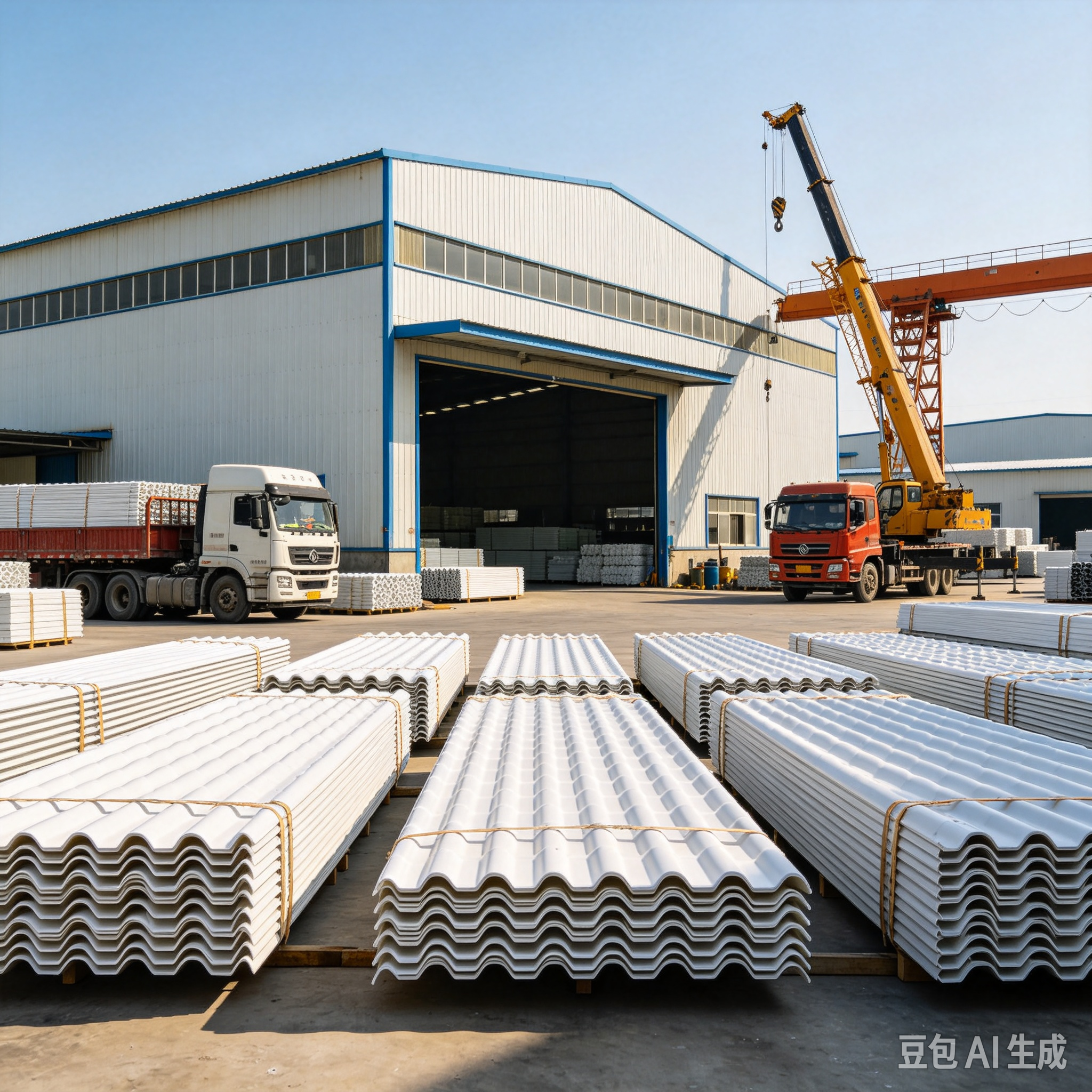
Another trap is neglecting packaging specifications for export or cross-country transport. PVC sheets flex during transit. Without rigid wooden crates or reinforced pallets, banded stacks can distort their wave profiles under humid container conditions, making overlap interlocking frustratingly difficult on the roof.
Frequently Asked Questions
How does PVC roofing perform compared to FRP (fiberglass) panels?
While FRP sheets offer high tensile strength thanks to embedded glass fibers, they often suffer from "fiber bloom" over years of UV exposure as the surface polyester resin erodes. Multi-layer ASA/PVC panels maintain a smoother, self-cleaning surface and generally exhibit superior chemical resistance against concentrated alkaline environments.
Can standard PVC panels be walked on during maintenance?
No industrial PVC profile should be treated as a direct walking surface without crawl boards or safety staging. Sourcing teams should reinforce this constraint with installation and facility maintenance teams, regardless of the panel's reported tensile rating.
Moving Forward with Your Selection
Before committing to container-load volumes, request unweathered cut samples alongside accelerated aging data (such as Xenon arc test results exceeding 3,000 hours). Work directly with the technical department of your prospective PVC roof panel supplier to review your local wind loads and purlin layout. Verifying raw compounding ratios and warranty definitions upfront will prevent costly structural failures on the facility floor later.